Executive Summary
Download the Executive Summary
State support for preschool education hit record highs in enrollment, quality, and funding in the 2024-2025 school year, although the pace of growth slowed from the prior year. As in the past, some states advanced more than others. This year brings to the forefront for the first time one state that excels at both access and quality standards: Georgia.
The 23rd State of Preschool report finds that Georgia—already a leader in preschool for 4-year-olds—invested an additional $97.6 million including funds for quality improvements to become the first state with a universal program that meets all 10 of NIEER’s research-based benchmarks for quality. Georgia reached this pinnacle by lowering class sizes from 22 to 20 and improving teacher-to-child ratios from 1:11 to 1:10. Notably, some of Georgia’s new investment went toward increasing teacher salaries to ensure pay parity with K–12 and to increase access to summer transition programs.
In 2024-2025, new preschool spending records were largely propelled by several states that aggressively increased enrollment and spending without raising quality standards. California, Colorado, Michigan, Minnesota, and Missouri contributed the most to increased enrollment, adding more than 52,000 new seats. Michigan and New Jersey each increased preschool spending by more than $100 million (adjusted for inflation) as both states moved toward preschool for all.
Despite this overall progress, not every state moved forward. Some states even lost ground. If providing high-quality preschool education to all 3- and 4-year-olds were a race, some states are nearing the finish line, others have stumbled and fallen behind, and a few have yet to leave the starting line.
Historic and Emerging Preschool Leaders
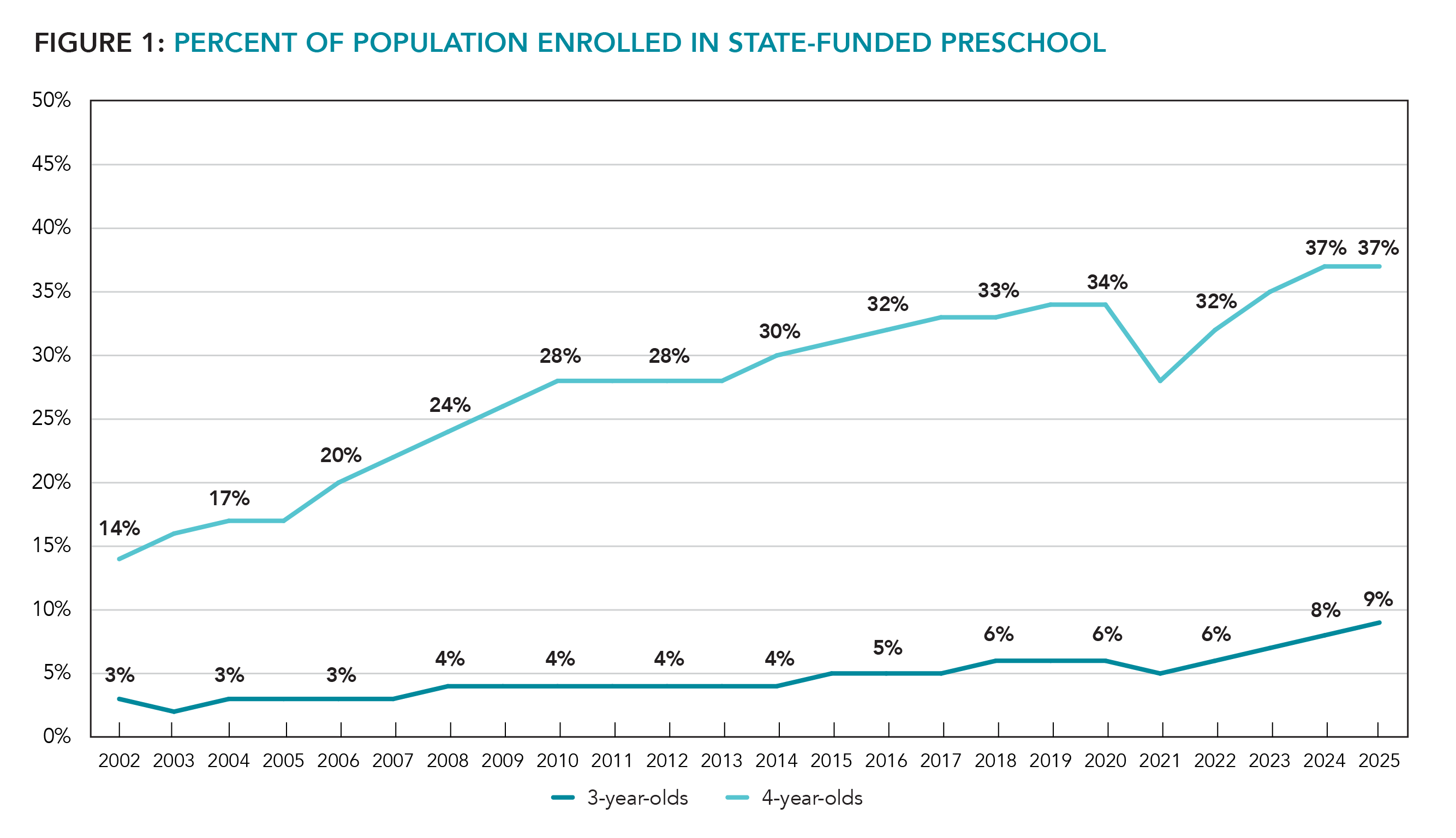
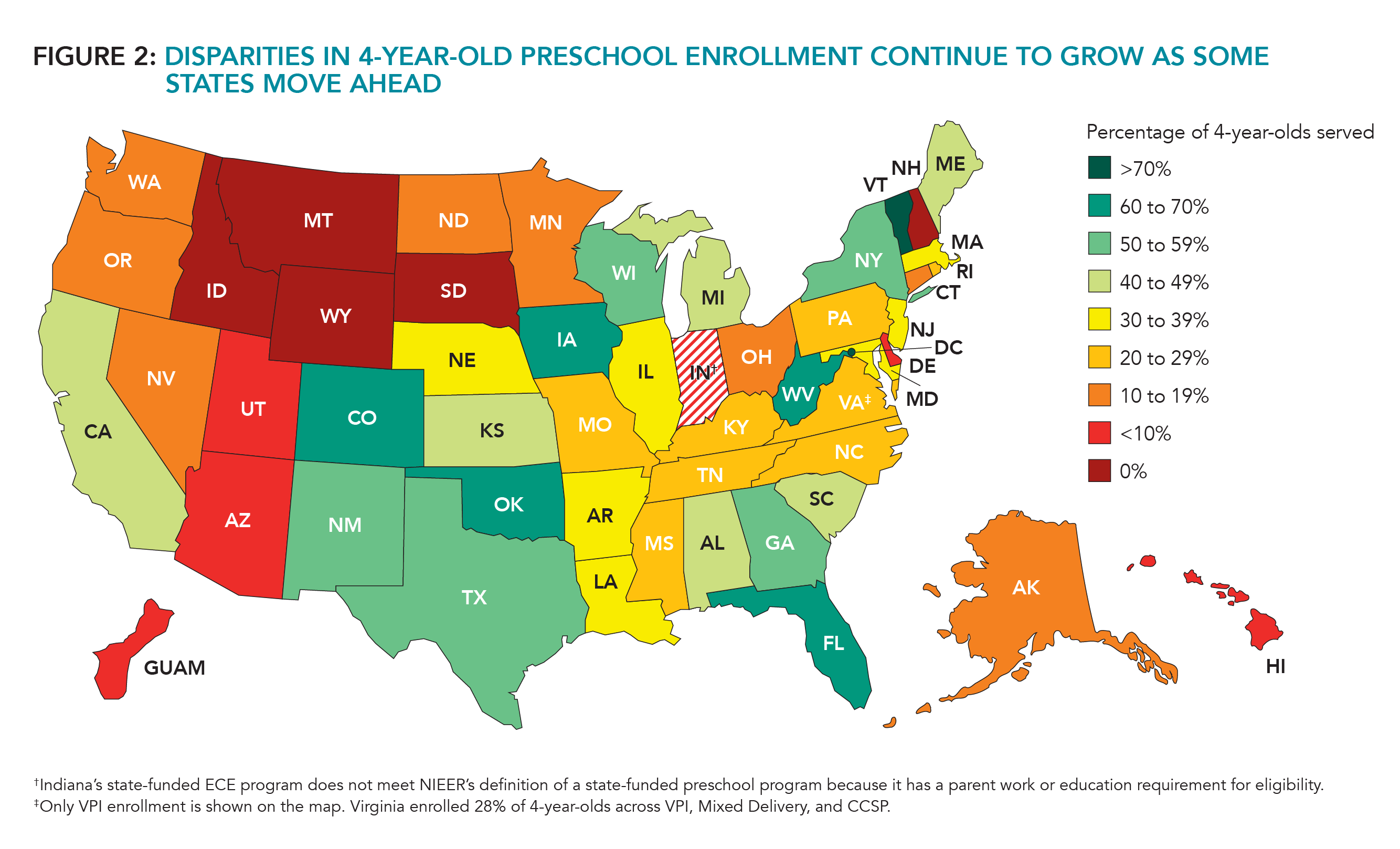
Nationally, enrollment reached nearly 1.8 million children during the 2024-2025 school year, including 37% of 4-year-olds and 9% of 3-year-olds. California enrolled more than one-quarter of a million children and Texas came close, while Florida and New York each enrolled more than 150,000 children. Forty-six percent of all children enrolled in state-funded preschool were in these four states.
Twelve states enrolled more than 50% of their 4-year-olds in state-funded preschool programs, led by the District of Columbia, which enrolled 94% of 4-year-olds. Other states surpassing half of 4-year-olds include Vermont (72%), Colorado (70%), West Virginia (66%), Oklahoma (65%), Iowa (65%), Florida (63%), Wisconsin (59%), New York (56%), Georgia (53%), New Mexico (53%), and Texas (52%). Missouri had the largest year-over-year increase in the percentage of 4-year-olds served, increasing from 10 to 22% of 4-year-olds.
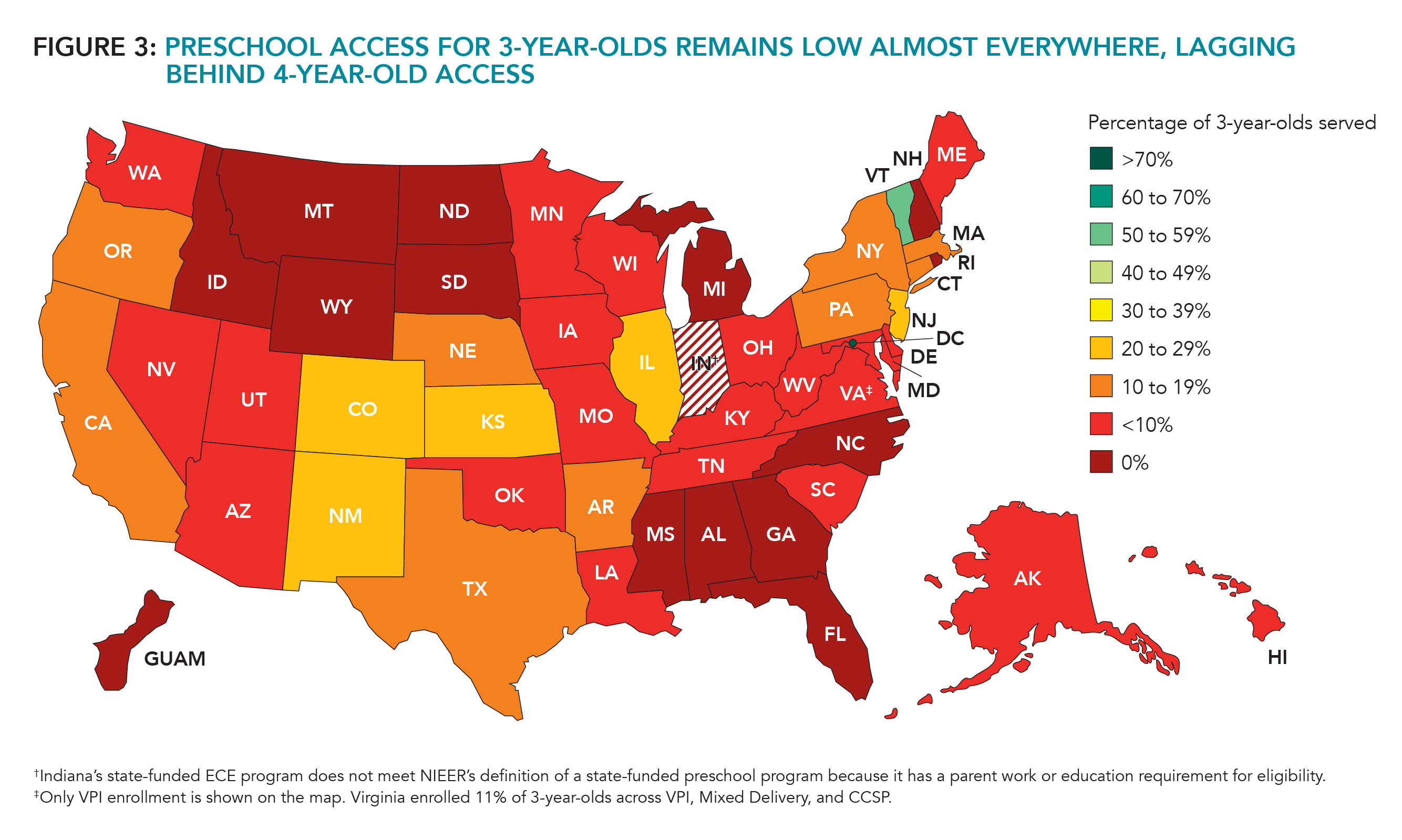
Enrollment at age 3 continued to lag behind enrollment at age 4, and it increased by only 8,000 children nationally. The District of Columbia served 76% of 3-year-olds while Vermont served 56%, far ahead of the next best state. Five other states (Colorado, Illinois, Kansas, New Mexico, and New Jersey) enrolled more than one-fifth of 3-year-olds, more than double the national average of 9%. Illinois, New Jersey, and New Mexico stand out as three states working toward preschool for all for 3-year-olds as well as 4-year-olds.
Preschool enrollment increased nationally by 44,000 children from the prior year. The numbers and the percentages of 3- and 4-year-olds served all increased, though these increases were much smaller than the prior year. California alone accounted for most of the increased enrollment, adding more than 25,000 children, driven by expansion of the state’s Transitional Kindergarten program. Missouri served nearly 10,000 more preschoolers across its two state-funded preschool programs, and enrollment in Michigan increased by more than 6,800 children as they removed their income eligibility requirements and moved toward preschool for all. Five states increased enrollment of 4-year-olds by five percentage points or more, including California and Michigan which are both working toward universal preschool for 4-year-olds. Minnesota, Missouri, and Rhode Island were also on this list of states with notable increases in the percentage of 4-year-olds enrolled.
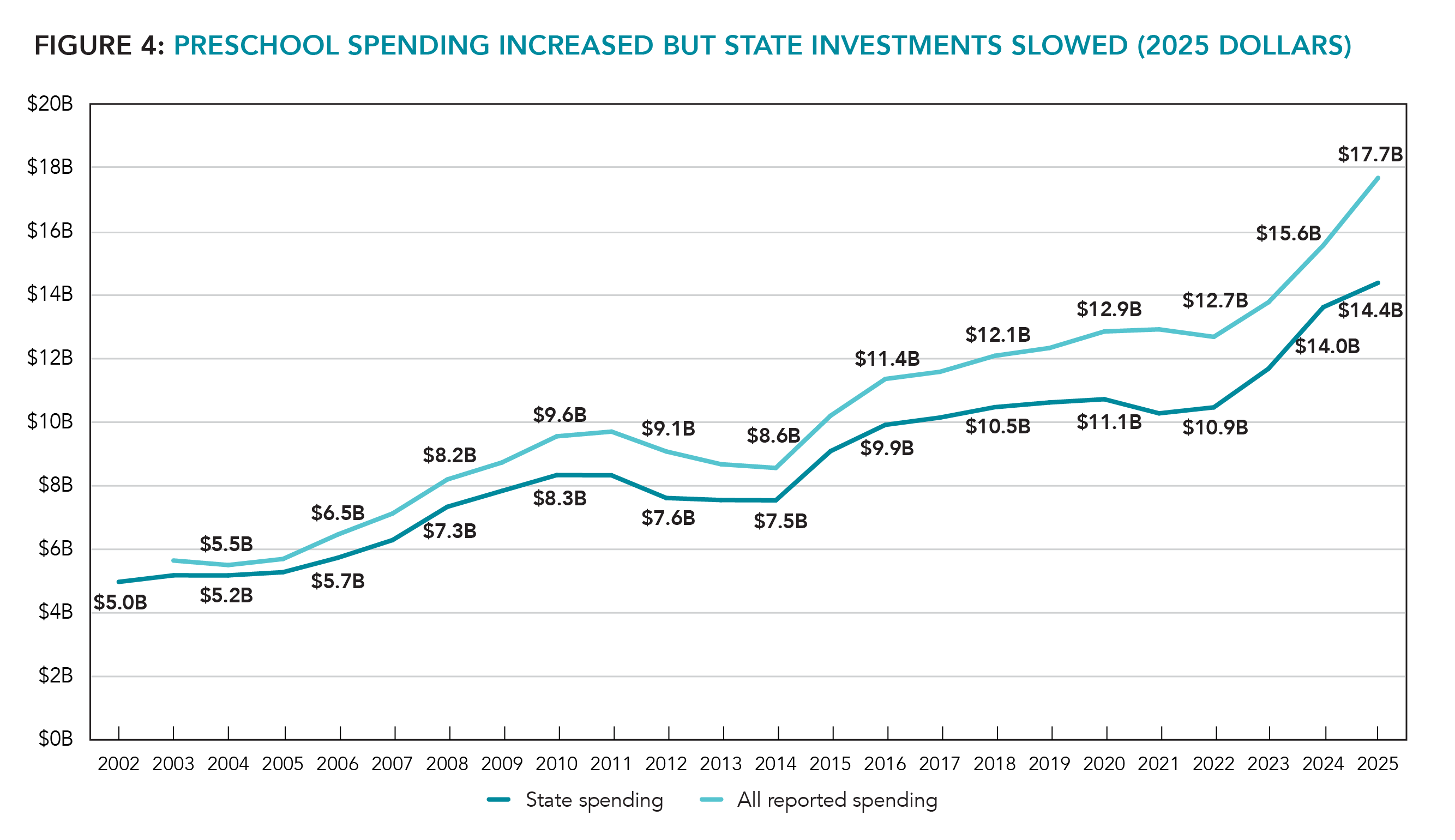
States spent nearly $14.4 billion on preschool during the 2024-2025 school year. Including federal and local dollars, total spending was nearly $17.7 billion. Three of the most populous states spent more than $1 billion each on preschool: California spent $4.1 billion, New Jersey spent $1.2 billion, and New York spent $1 billion. Together, these three states account for 45% of all state preschool spending. Texas adds almost another $1 billion. The smallest of these states, New Jersey, stands among this top group because of its high level of state funding per child and relatively high enrollment of 3-year-olds.
Preschool spending increased by $434 million (3%), adjusted for inflation, since 2023-2024. Twenty-eight states increased spending, adjusted for inflation. Two states, Michigan and New Jersey, each increased preschool spending (adjusted for inflation) by more than $100 million. Georgia increased preschool investments by $72 million in constant 2024 dollars (i.e., after adjusting prior year spending upward for inflation) to reduce class sizes, improve teacher-to-child ratios, and improve lead and assistant teacher compensation.
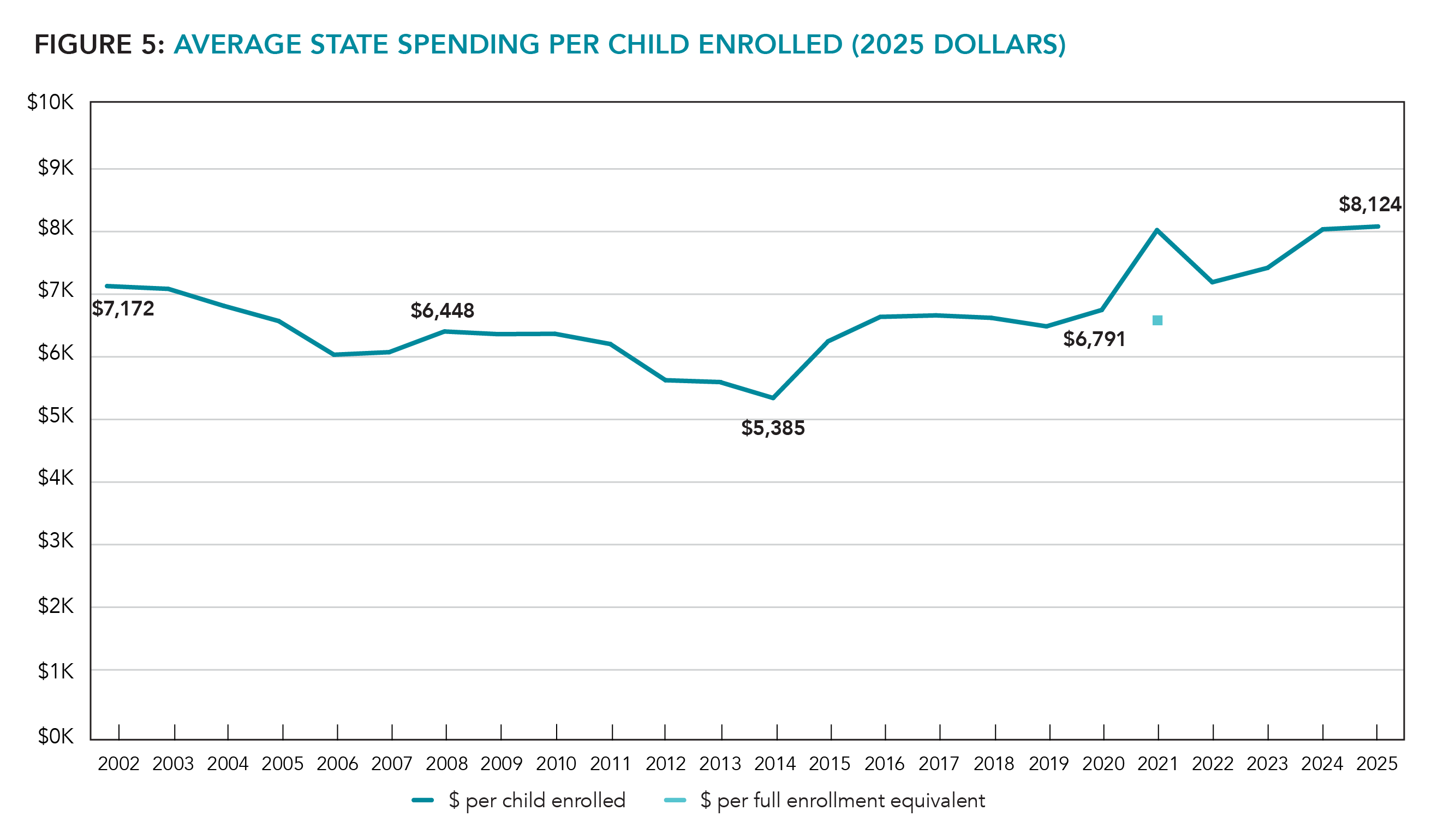
On average, states spent $8,124 per child enrolled in preschool ($9,988 including federal and local funds). The District of Columbia, New Jersey, and Oregon provided more than $15,000 in state funding per child enrolled in preschool. Six other states invested more than $10,000 per child (California, Connecticut, Delaware, Michigan, New Mexico, and Washington). Taking into account state, federal, and local funding that states can report were used to support state-funded preschool, two additional states spent more than $15,000 per child (California and New York) and 11 additional states spent more than $10,000 per child (Alabama, Arkansas, Kentucky, Maine, Maryland, Nebraska, New York, Oklahoma, Vermont, Virginia, and West Virginia). Twenty-eight states increased state spending per child, adjusted for inflation.
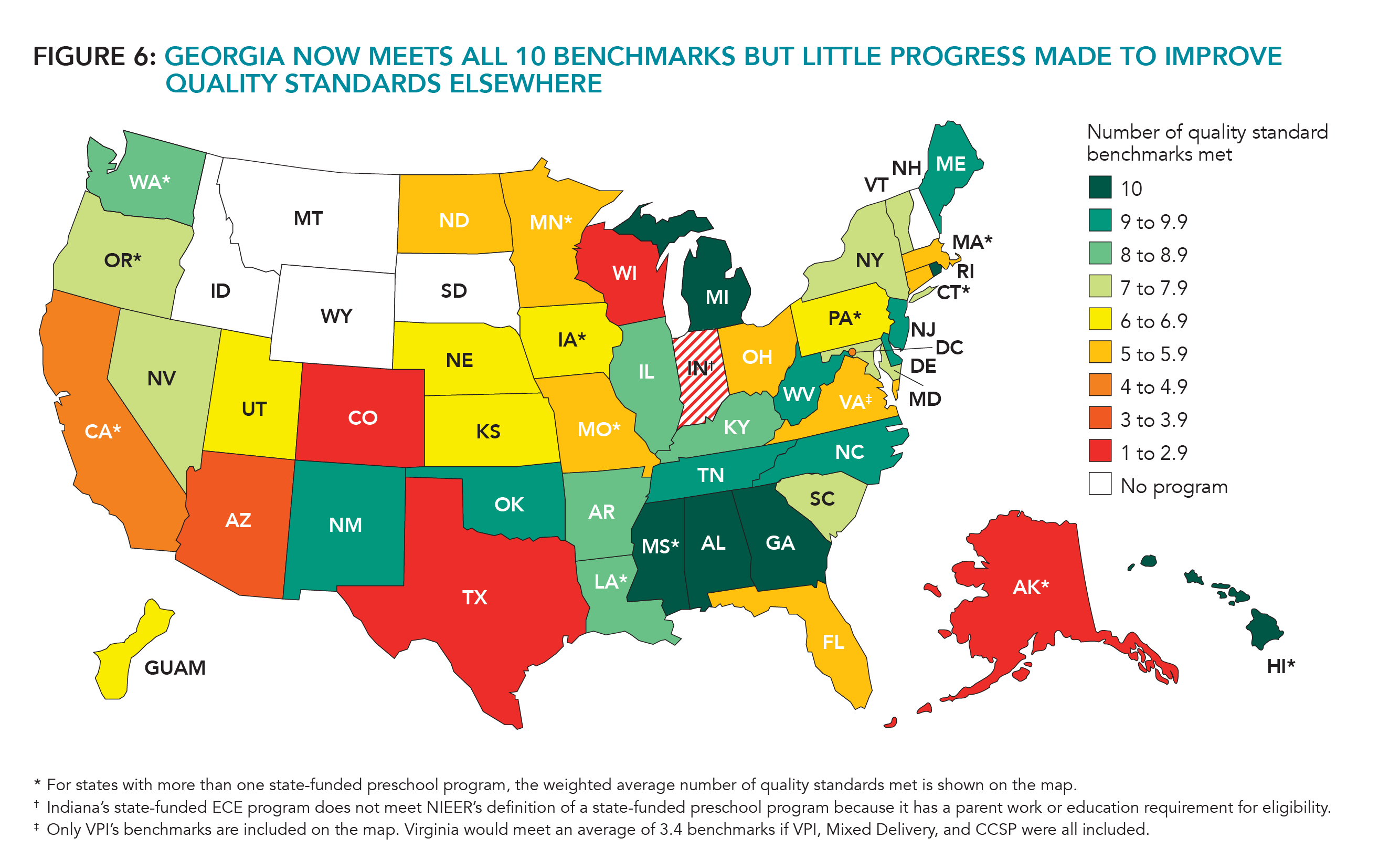
In 2024-2025, a record six states met all 10 of NIEER’s quality standards benchmarks: Alabama, Georgia, Hawaii, Michigan, Mississippi, and Rhode Island. Georgia joined this esteemed list this year after they lowered class sizes from 22 to 20 and improved teacher-to-child ratios from 1:11 to 1:10. These six states provide a range of examples for other states aiming to improve preschool quality standards.
States That Fell Behind
Not all states moved forward. Twenty states enrolled fewer preschoolers in 2024-2025 than the prior year. Enrollment decreased by more than 1,000 children in six states (Arizona, Florida, New York, Ohio, Oklahoma, and Wisconsin). Some enrollment declines could be explained by declining populations of 3- and 4-year-olds. However, the percentage of 3- and 4-year-olds enrolled, which accounts for population, declined in 21 states. Wisconsin had the largest decline in the percentage of 4-year-olds enrolled in preschool, serving 4 percentage points fewer 4-year-olds than the prior year. New York’s decline is surprising given New York City’s preschool for all initiative which might have been expected to move the state ahead.
Seventeen states spent less on preschool in 2024-2025 than they did in 2023-2024, when adjusted for inflation. Texas spent $84.5 million less than the prior year. The states with the largest percentage decline in preschool spending were Alaska, Arizona, Kentucky, Nebraska, and North Carolina.
Very low levels of funding per child enrolled are a concern because inadequate resources make it difficult if not impossible to provide a high-quality early education. Eight states invested less than $4,000 per child (Florida, Iowa, Massachusetts, Missouri, Nebraska, South Carolina, Utah, and Wisconsin). As local and federal funding can be substantial, states with very low spending from all reported sources are especially noteworthy, like Florida ($2,963). While Nebraska has low state spending per child, substantial local and federal funding support their program, raising spending per child to almost $12,000.
States Still At The Starting Line
Six states continue not to fund a state-funded preschool program meeting NIEER’s definition: Idaho, Indiana, Montana, New Hampshire, South Dakota, and Wyoming. Indiana’s On My Way Pre-K is similar to a state funded preschool program but has a parental work or school requirement, so it is profiled in this report but not included in rankings. Montana and Wyoming both have early childhood programs that provide services similar to those of a state-funded preschool program.
What’s New: The Details
RESOURCES
- Total state spending for preschool programs reached another all-time high of nearly $14.4 billion across 44 states and the District of Columbia*. Six states still did not fund a preschool program meeting NIEER’s definition in 2024-2025.
- States reported spending only $28 million in federal COVID-19 relief funding on preschool, about 10% of the amount used last year.
- Including COVID-19 relief dollars, spending on state-funded preschool increased by $434 million (3%), adjusted for inflation from 2023-2024. While spending on preschool continued to increase, the increase was much smaller than the prior year.
- Average state spending per child enrolled was $8,124. Adjusted for inflation, this is a $45 per child increase from 2023-2024. Last year’s increase was 16 times as large.
- All-reported spending, which includes local and federal dollars to the extent states can report them, was $17.7 billion, an inflation-adjusted increase of more than $2 billion (14%) from 2023-2024. All reported spending per child was $9,988, an inflation-adjusted increase of $975 from 2023-2024, reflecting a relatively large increase in reported non-state funding.
ENROLLMENT
- States enrolled almost 1.8 million children in state-funded preschool, including 1.42 million four-year-olds and 315,293 three-year-olds. This amounts to 9% of 3-year-olds and 37% of 4-year-olds enrolled.
- While the numbers and percentages of 3-year-olds and 4-year-olds enrolled all increased, growth in preschool enrollment slowed drastically from the prior year. Enrollment in state-funded preschool increased by just 44,000 children between 2023-2024 and 2024-2025, much less than last year.
- Total preschool enrollment increased in 25 states between 2023-2024 and 2024-2025, but decreased in 20 states.
- In 20 states, the number of preschoolers enrolled was lower in 2024-2025 than before the pandemic.
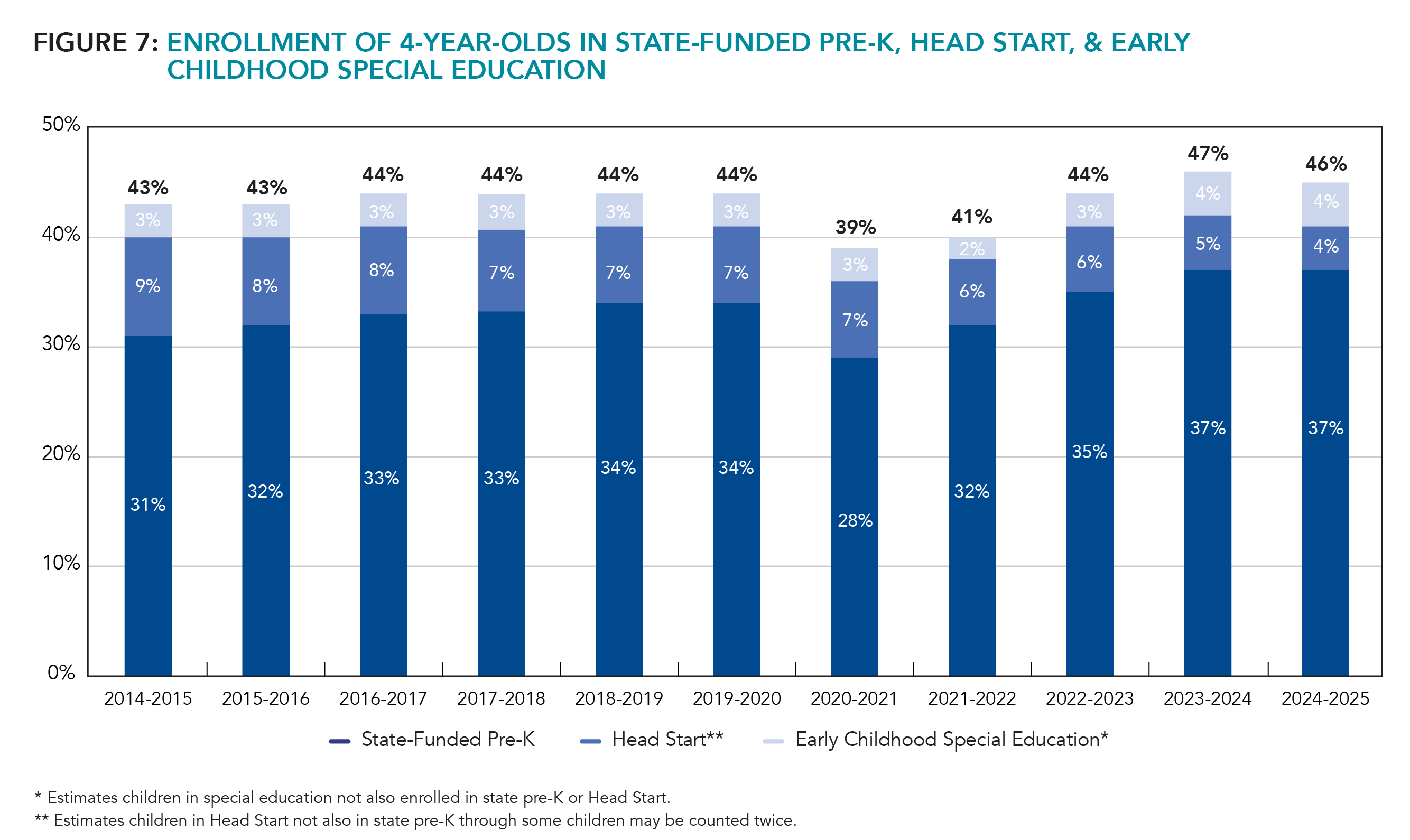
Across all major public programs—state-funded preschool, preschool special education, and the federal Head Start program—46% of 4-year-olds and 17% of 3-year-olds were served. Almost 29,000 fewer 3- and 4-year-olds were served across these programs in 2024-2025 than the prior year. This decline is driven by reduced federal Head Start enrollment at ages 3 and 4, which remains below pre-pandemic levels.
QUALITY STANDARDS
- Georgia improved from meeting 8 of NIEER’s quality standards benchmarks in 2023-2024 to meeting all 10 in 2024-2025 after lowering class sizes and improving staff to child ratios.
- Alabama, Georgia, Hawaii, Michigan, Mississippi, and Rhode Island are the only six states—a record high number—to meet all 10 of NIEER’s quality standards benchmarks for state preschool quality standards.
- Twenty state-funded preschool programs met five or fewer of the quality standards benchmarks, including three of the four largest programs (California TK, Florida, and Texas). Forty-six percent of children in state-funded preschool were in a program meeting half or fewer of the quality standards benchmarks. Only 21% of children were in programs meeting 9 or 10 benchmarks.
IMPORTANT DEVELOPMENTS
- Indiana’s On My Way Pre-K program is included in the Yearbook again. Although it does not meet NIEER’s definition of a state-funded preschool program because of its parental work or school requirement, it does provide early education to 4-year-olds. The program is described on the state’s profile page but is not included in national numbers or rankings.
- Virginia’s Mixed Delivery program introduced a parental work or school requirement and therefore no longer meets NIEER’s definition of a state-funded preschool program. Virginia’s Child Care Subsidy Program (CCSP) is included in the Yearbook for the first time but also has a parental work or school requirement and does not meet NIEER’s definition of a state-funded preschool program. These two programs are described in profile pages but are not included in national totals or Virginia’s rankings. However, we do include a page showing what Virginia’s rankings would be if those two programs were included.
* Consistent with U.S. government statistical practices, the District of Columbia will be referred to as a “state” throughout this report. Hence, we report 45 “states” providing state-funded preschool.