State of Preschool
Access Rankings
4-year-Olds
44
3-year-Olds
32
Resource Rankings
State spending
39
All reported spending
36
Total Benchmarks Met
Of 10 benchmarks possible
6
Overview
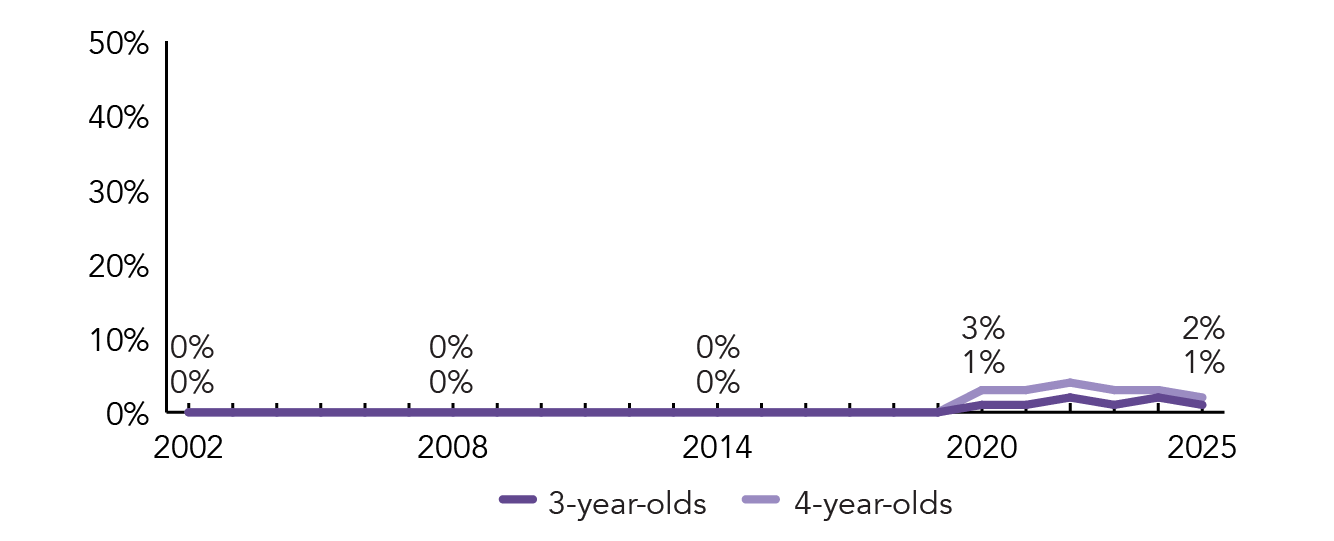
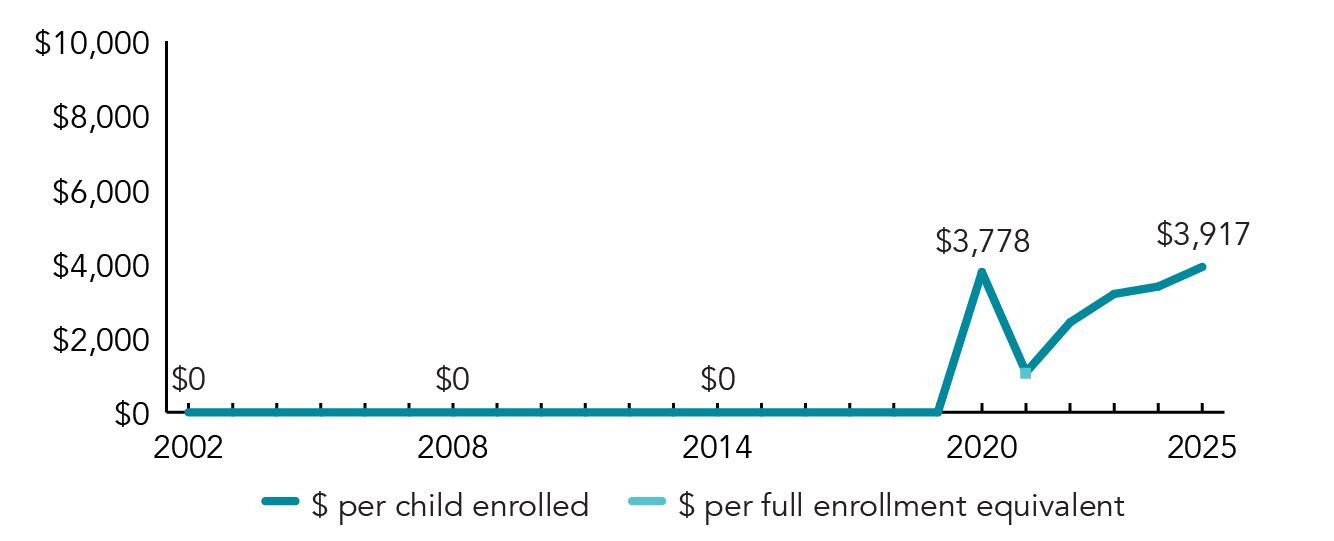
During the 2024-2025 school year, Utah preschool programs enrolled 1,653 children, a decrease of 358 from the prior year. State spending totaled $6,474,481, down $338,229 (5%), adjusted for inflation, since last year. State spending per child equaled $3,917 in 2024-2025, up $529 from 2023-2024, adjusted for inflation. Utah met 6 of 10 quality standards benchmarks.
What's New
During the 2024–2025 program year, Utah revised governance of the High Quality School Readiness Grant program, shifting oversight from an appointed School Readiness Board to a School Readiness Team made up of staff from the Department of Workforce Services Office of Child Care and the Utah State Board of Education. This change streamlined administration, improved responsiveness to grantees, and strengthened focus on implementation and monitoring of legislatively required program elements. Recent legislative action also extended grant terms from one year to three years, reducing administrative burden for participating programs.
Following several years of declining funded capacity, the legislature increased federal Temporary Assistance for Needy Families (TANF) support for the program. Utah allocated an additional $2 million in TANF funding for the 2025–2026 program year and approved continued funding of $2 million annually for FY 2026 through FY 2028, allowing the addition of new grantees and an increase in funded preschool seats. Utah also received a new Preschool Development Grant Birth–Five (PDG B–5) Systems Building award of $7,269,293 to support statewide care coordination, continued implementation of the Pyramid Model, family engagement through the Sparkler app, development of the Early Childhood Utah one-stop intake website, and partnerships to strengthen early education and early literacy.
Background
Utah established the High-Quality School Readiness Program Expansion in 2016 to expand access to high-quality preschool for four- year-olds experiencing intergenerational poverty. In 2019, the legislature restructured the program to include the Expanded Student Access grant, supporting preschool access for eligible three- and four-year-olds, and the Becoming High Quality grant, focused on program improvement. Legislative revisions in 2024 further streamlined program management, modified eligibility requirements, and prioritized funding for preschool seats in high-quality programs.
Utah’s Core State Standards for Early Learning for ages 3–5 were approved in 2020, with a phased approach to updating content areas alongside the K–12 standards. The early learning English Language Arts standards were updated in 2023, while mathematics and physical education standards are currently under revision.
Expanded Student Access to High Quality School Readiness Programs (ESA)
Access
| |
| Total state pre-K enrollment | 1,653 |
| School districts that offer state program | 38% (counties) |
| Income requirement | 185% FPL |
| Minimum hours of operation | Determined locally |
| Operating schedule | Determined locally |
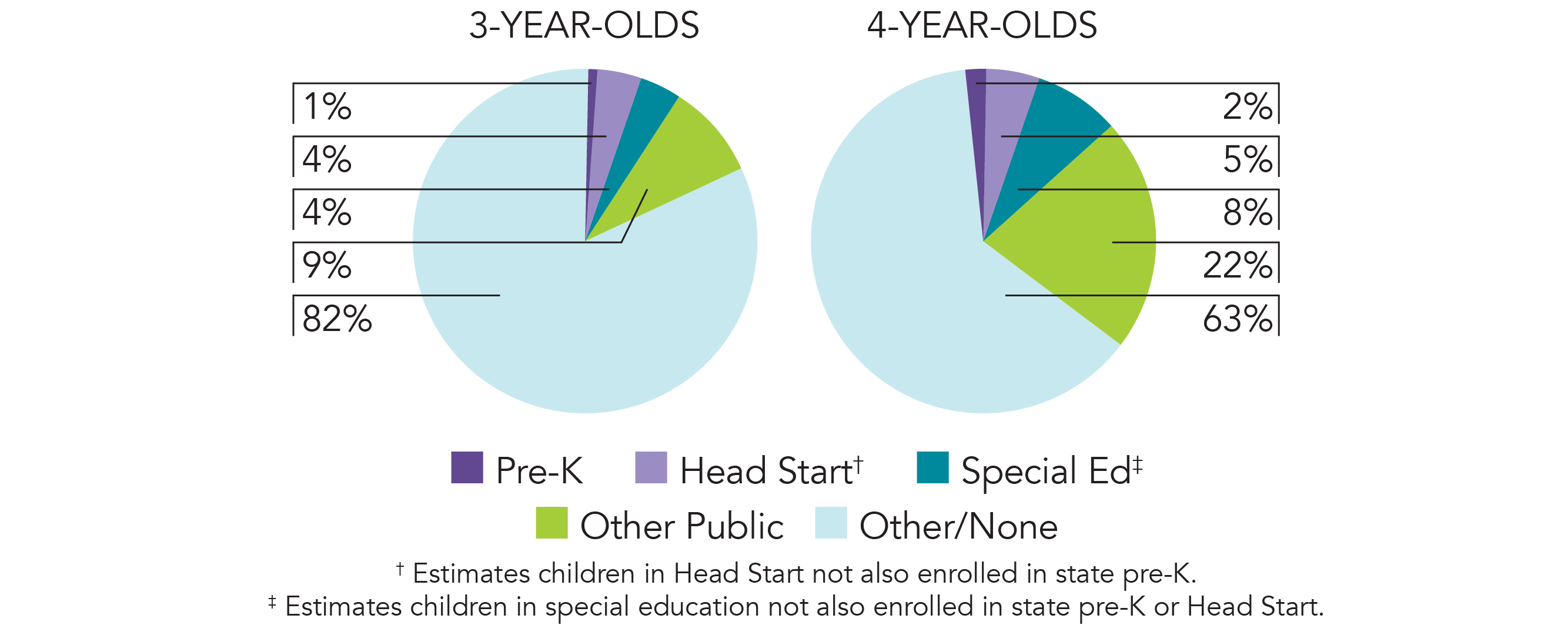
| Special education enrollment, ages 3 and 4 | 6,877 |
| Federally funded Head Start enrollment, ages 3 and 4 | 3,974 |
| State-funded Head Start enrollment, ages 3 and 4 | 0 |
Resources
| Total state pre-K spending | $6,474,481 |
| Local match required? | No |
| State Head Start spending | $0 |
| State spending per child enrolled | $3,917 |
| All reported spending per child enrolled* | $6,134 |
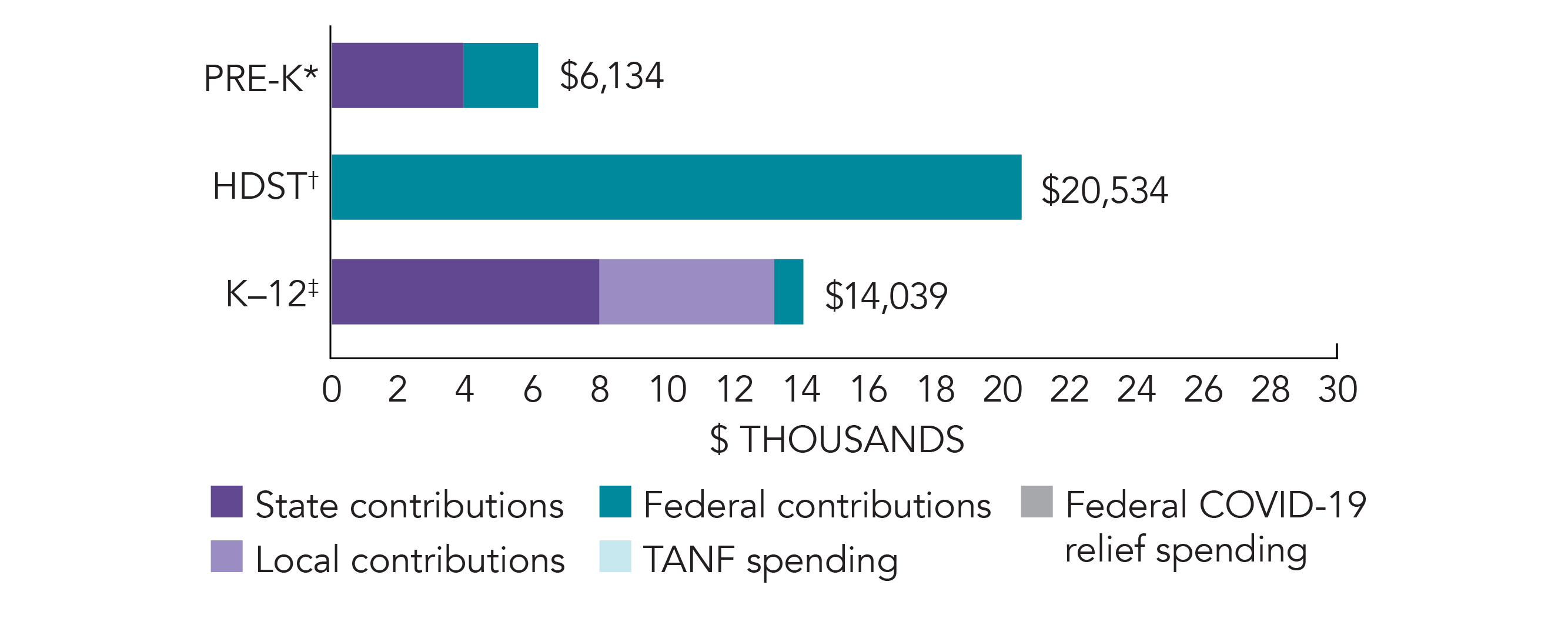
*Pre-K programs may receive additional funds from federal or local sources that are not included in this figure. †Head Start per-child spending includes funding only for 3- and 4-year-olds. ‡K–12 expenditures include capital spending as well as current operating expenditures.
Utah Quality Standards Checklist
| Policy | Requirement | Benchmark | Meets Benchmark? |
|---|---|---|---|
For more information about the benchmarks, see the Executive Summary and the Roadmap to State pages. | 6benchmarks met | ||
| Early Learning & Development Standards Benchmark | Comprehensive, aligned, supported, culturally sensitive | Comprehensive, aligned, supported, culturally sensitive | |
| Curriculum Supports Benchmark | Approval process & supports | Approval process & supports | |
| Teacher Degree Benchmark | CDA | BA | |
| Teacher Specialized Training Benchmark | CDA | Specializing in pre-K | |
| Assistant Teacher Degree Benchmark | None | CDA or equivalent | |
| Staff Professional Development Benchmark | 15 hours/year (teachers only); Coaching | For teachers & assistants: At least 15 hours/year; individual PD plans; coaching | |
| Maximum Class Size Benchmark | 20 (3- & 4-year-olds) | 20 or lower | |
| Staff to Child Ratio Benchmark | 1:10 (3- & 4-year-olds) | 1:10 or better | |
| Screening & Referral Benchmark | None | Vision, hearing & health screenings; & referral | |
| Continuous Quality Improvement System Benchmark | Structured classroom observations; Data used for program improvement | Structured classroom observations; data used for program improvement | |