State of Preschool
Rhode Island
Access Rankings
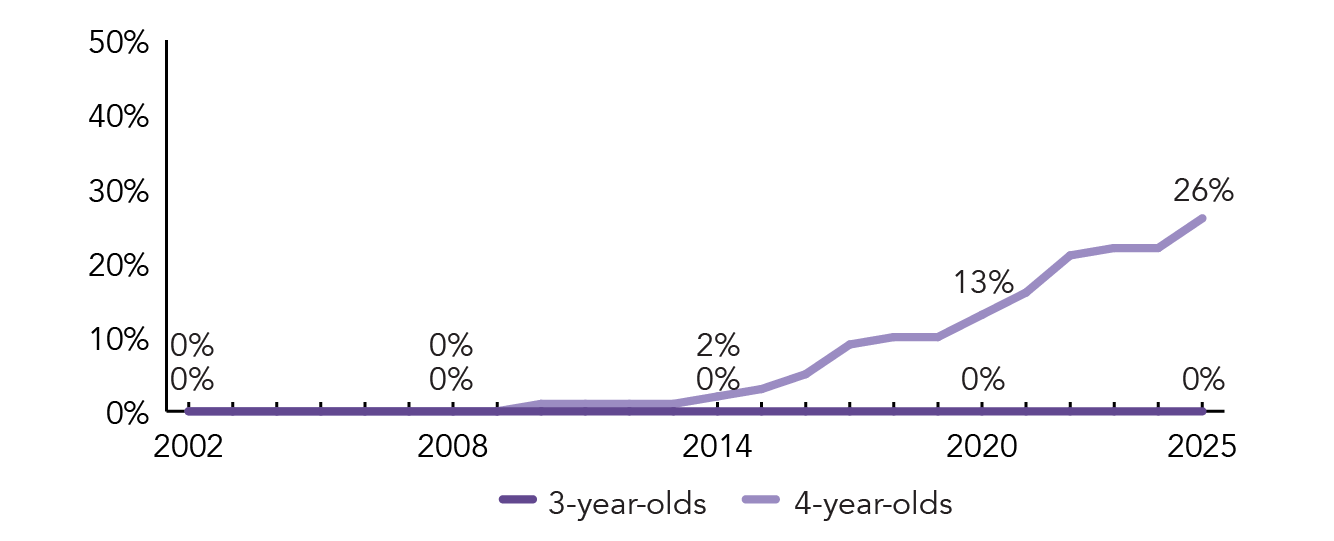
4-year-Olds
26
3-year-Olds
None Served
Resource Rankings
State spending
10
All reported spending
21
Total Benchmarks Met
Of 10 benchmarks possible
10
Overview
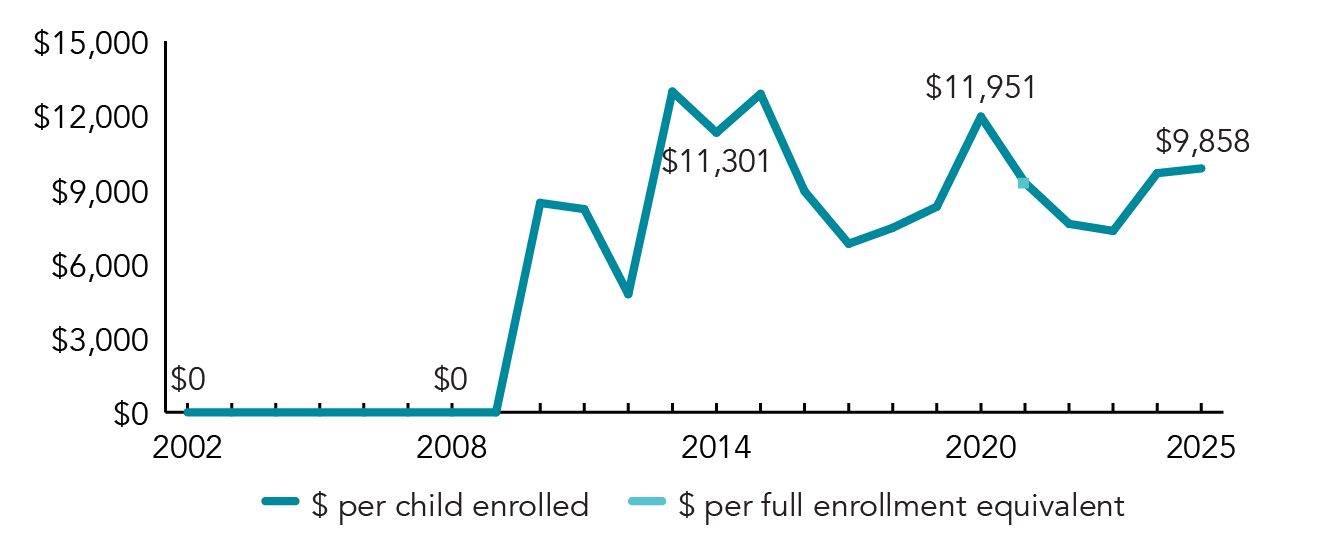
During the 2024-2025 school year, Rhode Island preschool enrolled 2,864 children, an increase of 500 from the prior year. State spending totaled $28,232,929, up $5,385,882 (24%), adjusted for inflation, since last year. State spending per child equaled $9,858 in 2024-2025 up $193 from 2023-2024, adjusted for inflation. Rhode Island met 10 of 10 quality standards benchmarks.
What's New
In 2024-2025, Rhode Island State Pre-Kindergarten Program received a $7 million influx of state funds for expansion, teacher increases, and comprehensive mental health supports for students. The Governor has a goal to reach 5,000 seats by FY28. Rhode Island remains committed to the high-quality pre-K programming that the model was built on and is being thoughtful on expansion, developing relationships and coaching models with programs interested in applying for RI Pre-K.
Additionally, in September 2024, Rhode Island was one of 10 states and D.C. awarded a 3-year federal renewal Preschool Development Grant B-5 (PDG B-5) totaling $4,945,055 annually. The PDG B-5 renewal grant is intended to carry out the strategic plans developed with the 2023 planning grants, which focused on RI Pre-K Monitoring and Continuous Quality Improvement, RI Pre-K Lottery system enhancements, Enhancing the RI Start Early System (RISES) and Program Quality Improvements.
Background
The Rhode Island State Pre-Kindergarten Program, launched in 2009, is provided in public schools, Head Start programs, and private childcare. All children who turn four years old by September 1 and are living in participating communities are eligible for the program, even though enrollment is determined by lottery.
The Rhode Island Department of Education (RIDE) oversees the pre-K program, funded through an Early Childhood Categorical line, created in 2010, within RIDE’s state-budget. Using a phased-in approach, $10 million was invested over ten years to expand access to high quality pre-K, commencing with communities containing a high proportion of children eligible for free or reduced-price lunch.
In 2014, Rhode Island received a $19 million federal Preschool Development Grant (PDG) to expand access to its high-quality pre-K program. This funding was used to expand access in high-need communities and to enhance program monitoring, evaluation, and technical assistance. Enrollment nearly doubled between the 2015-2016 and 2016-2017 school years as a result of the PDG support which leveled off (as planned), in 2017-2018 and 2018-2019.
Teachers in the program must hold a bachelor’s degree in early childhood. The Rhode Island Department of Elementary and Secondary Education provides training and technical assistance through a vendor to all staff on an ongoing basis. The Rhode Island Pre-Kindergarten Program has been assessed for both process quality and program impact/child outcomes, including classroom quality and child outcomes in literacy, arithmetic, and social-emotional development.
In addition to Pre-Kindergarten, the state provides $1.19 million to supplement Head Start and has also allocated $4 million in TANF
to support Head Start programs to recruit and retain qualified staff.
Rhode Island State Pre-Kindergarten Program
Access
| |
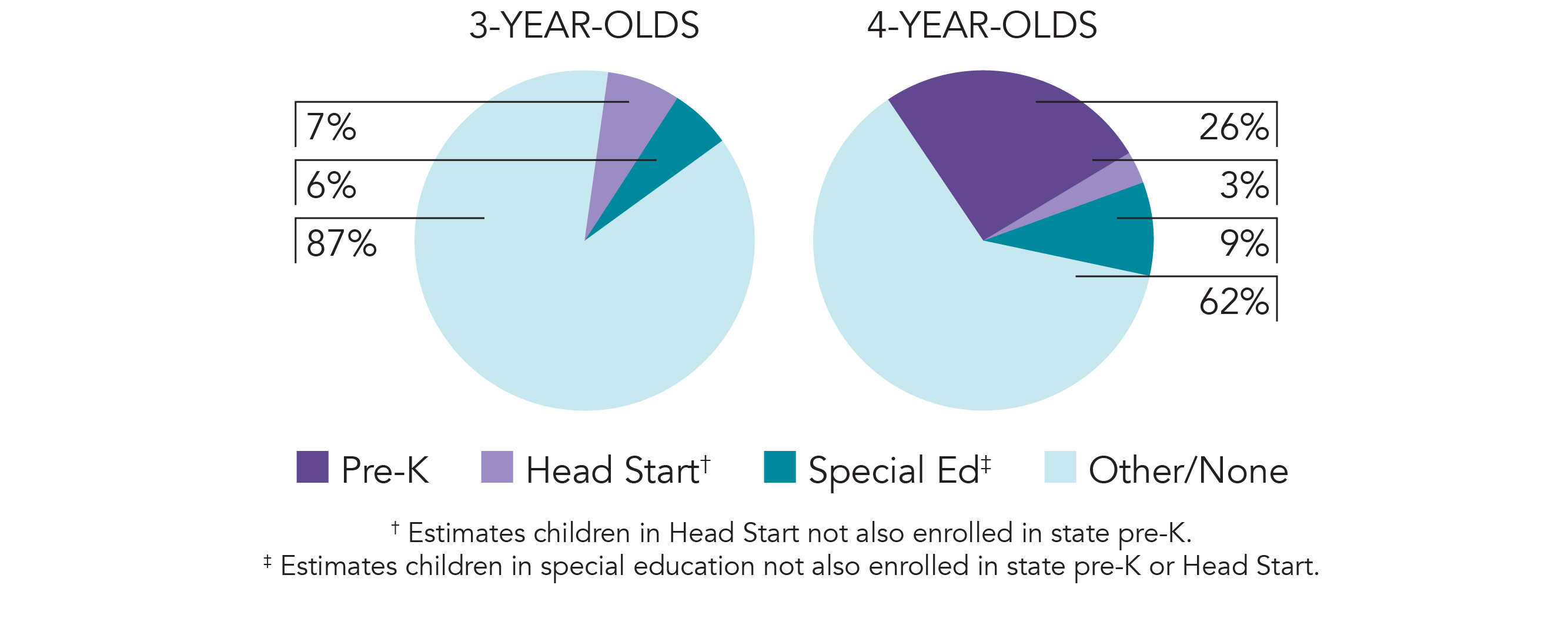
| Total state pre-K enrollment | 2,864 |
| School districts that offer state program | 51% (communities) |
| Income requirement | No income requirement |
| Minimum hours of operation | 6 hours/day; 5 days/week |
| Operating schedule | School or academic year |
| Special education enrollment, ages 3 and 4 | 2,199 |
| Federally funded Head Start enrollment, ages 3 and 4 | 1,340 |
| State-funded Head Start enrollment, ages 3 and 4 | 130 |
Resources
| Total state pre-K spending | $28,232,929 |
| Local match required? | No |
| State Head Start spending | $1,190,000 |
| State spending per child enrolled | $9,858 |
| All reported spending per child enrolled* | $9,933 |
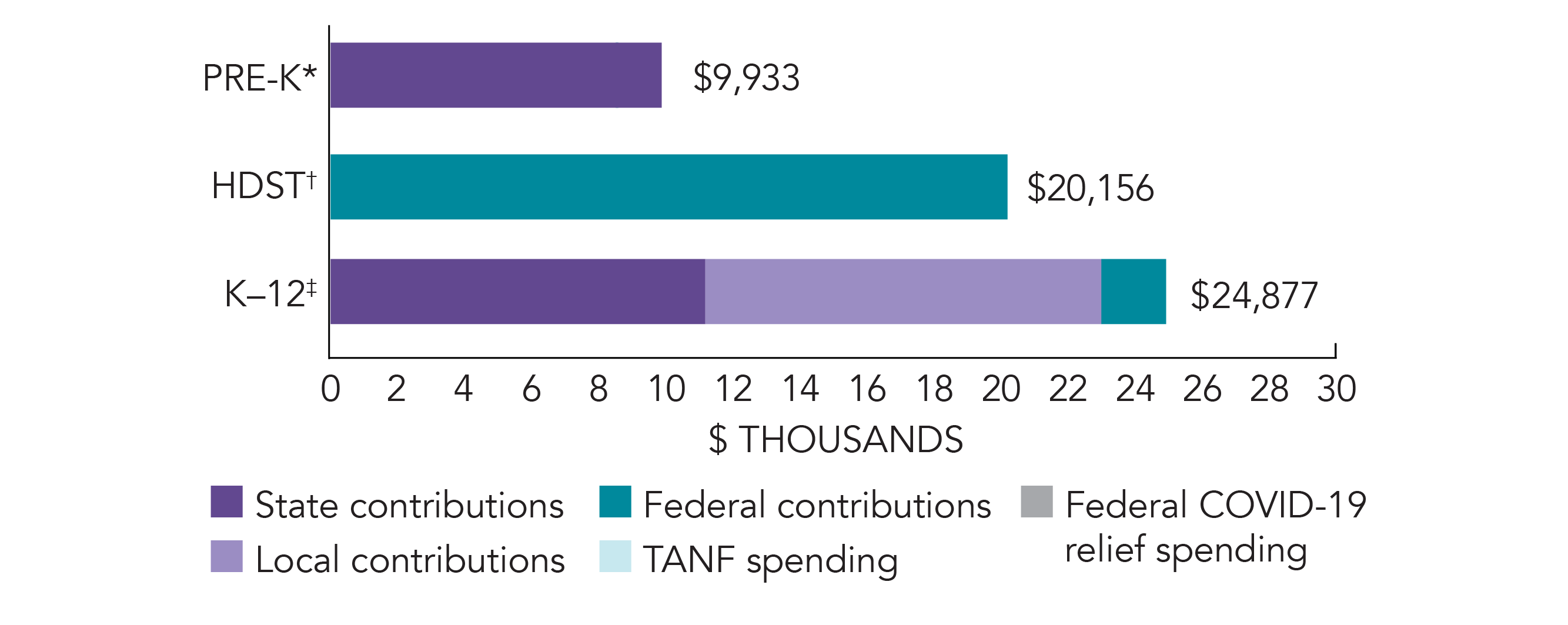
*Pre-K programs may receive additional funds from federal or local sources that are not included in this figure. †Head Start per-child spending includes funding only for 3- and 4-year-olds. ‡K–12 expenditures include capital spending as well as current operating expenditures.
Rhode Island Quality Standards Checklist
| Policy | Requirement | Benchmark | Meets Benchmark? |
|---|---|---|---|
For more information about the benchmarks, see the Executive Summary and the Roadmap to State pages. | 10benchmarks met | ||
| Early Learning & Development Standards Benchmark | Comprehensive, aligned, supported, culturally sensitive | Comprehensive, aligned, supported, culturally sensitive | |
| Curriculum Supports Benchmark | Approval process & supports | Approval process & supports | |
| Teacher Degree Benchmark | BA | BA | |
| Teacher Specialized Training Benchmark | ECE | Specializing in pre-K | |
| Assistant Teacher Degree Benchmark | HSD + 12 college credits in ECE/CD or a CDA | CDA or equivalent | |
| Staff Professional Development Benchmark | 24 hours/year; PD plans; Coaching | For teachers & assistants: At least 15 hours/year; individual PD plans; coaching | |
| Maximum Class Size Benchmark | 20 (4-year-olds) | 20 or lower | |
| Staff to Child Ratio Benchmark | 1:10 (4-year-olds) | 1:10 or better | |
| Screening & Referral Benchmark | Vision, hearing, health & more | Vision, hearing & health screenings; & referral | |
| Continuous Quality Improvement System Benchmark | Structured classroom observations; Data used for program improvement | Structured classroom observations; data used for program improvement | |