State of Preschool
Access Rankings
4-year-Olds
38
3-year-Olds
23
Resource Rankings
State spending
32
All reported spending
39
Total Benchmarks Met
Of 10 benchmarks possible
5
Overview
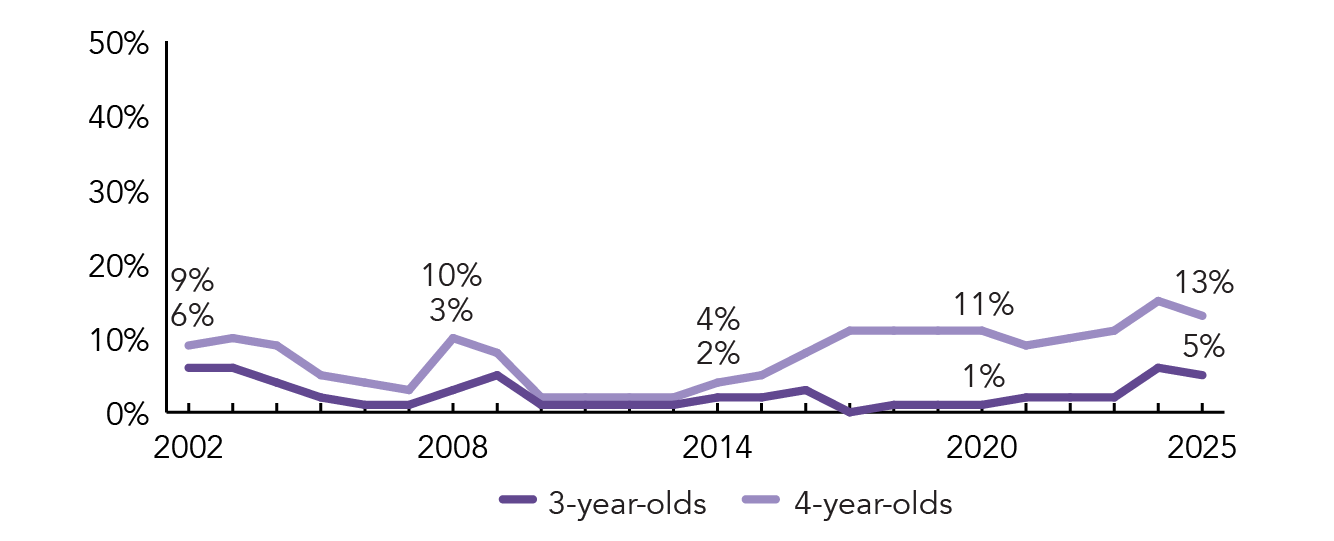
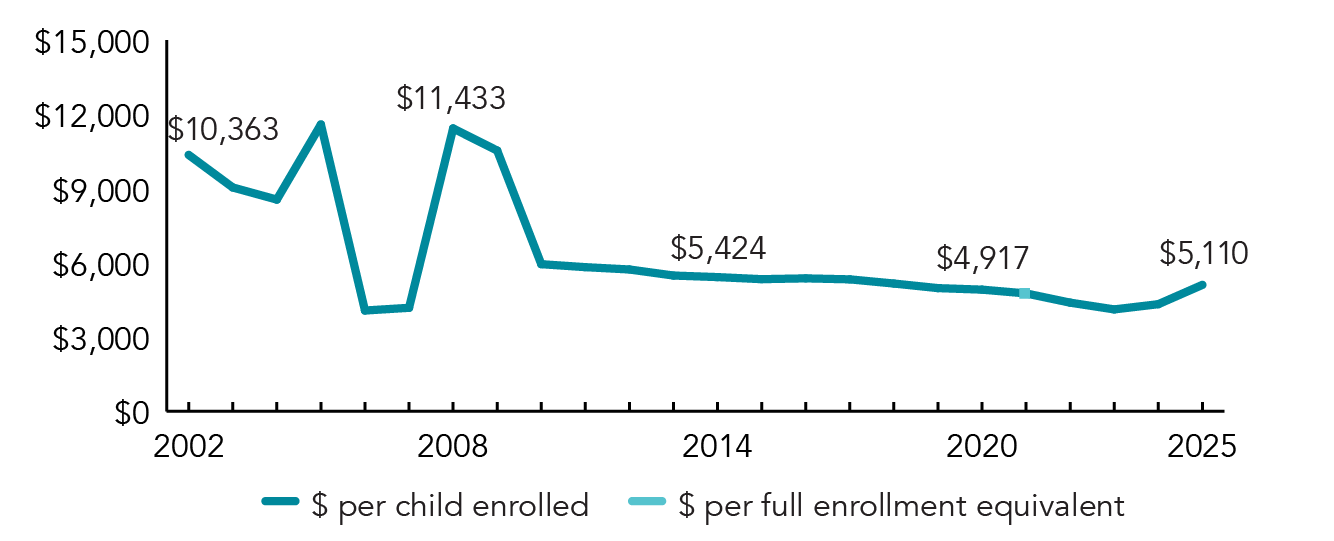
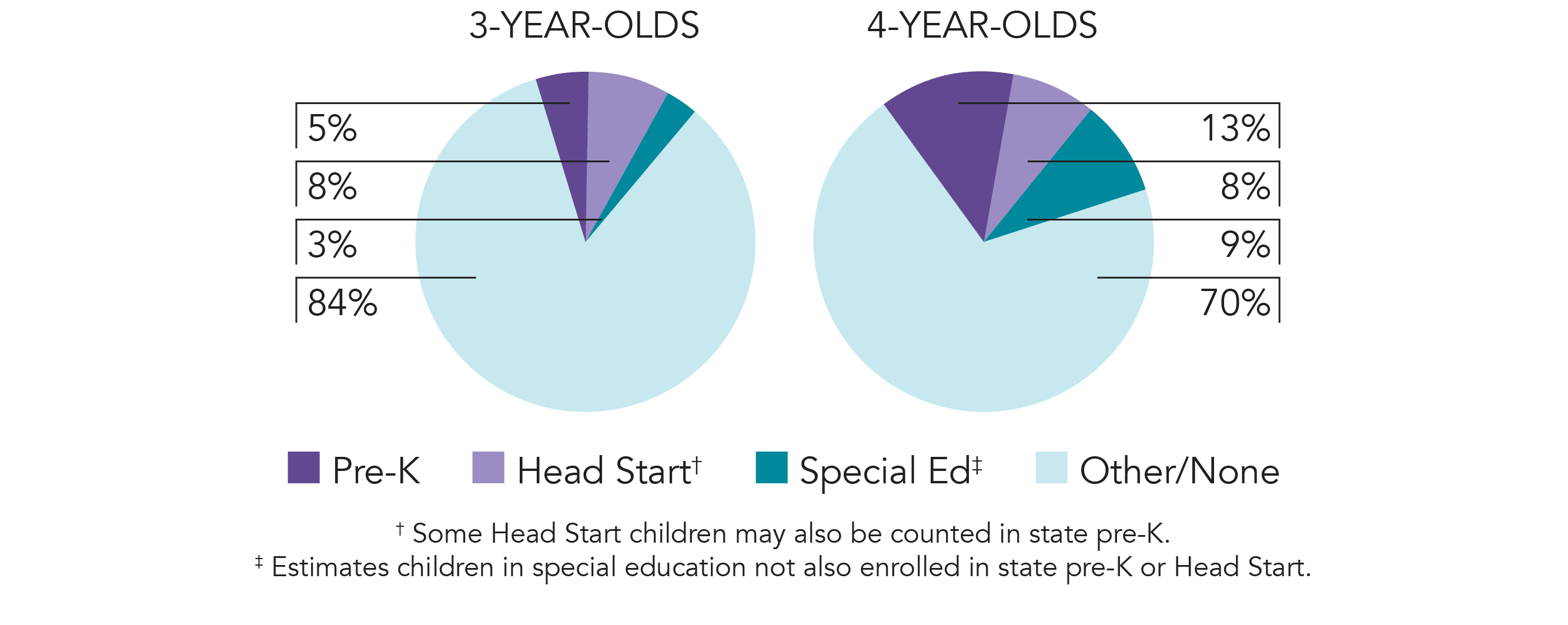
During the 2024-2025 school year, Ohio preschool enrolled 23,594 children, a decrease of 4,550 from the prior year. State spending totaled $120,573,483, down $1,257,827 (1%), adjusted for inflation, since last year. State spending per child equaled $5,110 in 2024- 2025, up $781 from 2023-2024, adjusted for inflation. Ohio met 5 of 10 quality standards benchmarks.
What's New
In 2024, six state agencies were consolidated into the new Ohio Department of Children & Youth (DCY), creating a single agency responsible for all licensed preschool programs and all state-funded Pre-K grantees. A central part of DCY’s mission is improving kindergarten readiness statewide through strengthening preschool quality and expanding access for families.
The revised Step Up To Quality (SUTQ) program standards in 2024 introduced an important change to curriculum requirements: at all rating levels, programs must obtain and implement a comprehensive, research-based assessment aligned with the Early Learning and Development Standards (ELDS) and the Science of Reading (SOR) for all infants, toddlers, and preschool-aged children. To assist providers, DCY has released an approved list of curriculum options and has made one of the approved curricula available free of charge to interested programs.
During 2024-2025, the state shifted to a centralized eligibility process with one unified application for all Early Care and Education Services. Under this approach, families were assessed for eligibility across multiple programs, including Publicly Funded Child Care (PFCC), Child Care Choice Voucher Program (CCVP), and the Early Childhood Education (ECE) Grant, and were placed into the program that best matched their needs and offered the most comprehensive services.
Background
The Ohio Public Preschool Program (PSP), established in 1990 following a four-year pilot program, strives to ensure children have access to quality programs through public preschool and publicly funded childcare. All types of programs have access to both public preschool and childcare funds. This report focuses on the Department of Children and Youth’s publicly funded Early Childhood Education Grant (ECE Grant) program, formally administered by the Ohio Department of Education and Workforce, excluding publicly funded child care and Head Start programs. In 2023, the state lifted the requirement that 3-year-old children needed prior approval to
enroll in the ECE Grant.
Ohio operates its publicly funded programs under common program and child standards. All ECE Grant programs are required to participate in the state’s quality rating and improvement system, Step Up to Quality (SUTQ). Ohio updated SUTQ in July of 2024, changing the five-star rating system to a three-tier rating system. ECE Grant programs are required to be rated as either silver or gold to demonstrate that they meet high-quality standards. SUTQ program standards are based on national research identifying indicators that lead to improved outcomes for children.
In addition to participating in SUTQ, ECE Grant program sites are monitored annually for quality via desk audits, internal monitoring materials, proposal of plans, and documentation, along with annual licensing visits, classroom observations, and child assessments.
Ohio Early Childhood Education
Access
| |
| Total state pre-K enrollment | 23,594 |
| School districts that offer state program | 41% |
| Income requirement | 200% FPL |
| Minimum hours of operation | 2.5 hours/day |
| Operating schedule | School or academic year |
| Special education enrollment, ages 3 and 4 | 23,007 |
| Federally funded Head Start enrollment, ages 3 and 4 | 21,151 |
| State-funded Head Start enrollment, ages 3 and 4 | 0 |
Resources
| Total state pre-K spending | $120,573,483 |
| Local match required? | No |
| State Head Start spending | $0 |
| State spending per child enrolled | $5,110 |
| All reported spending per child enrolled* | $5,110 |
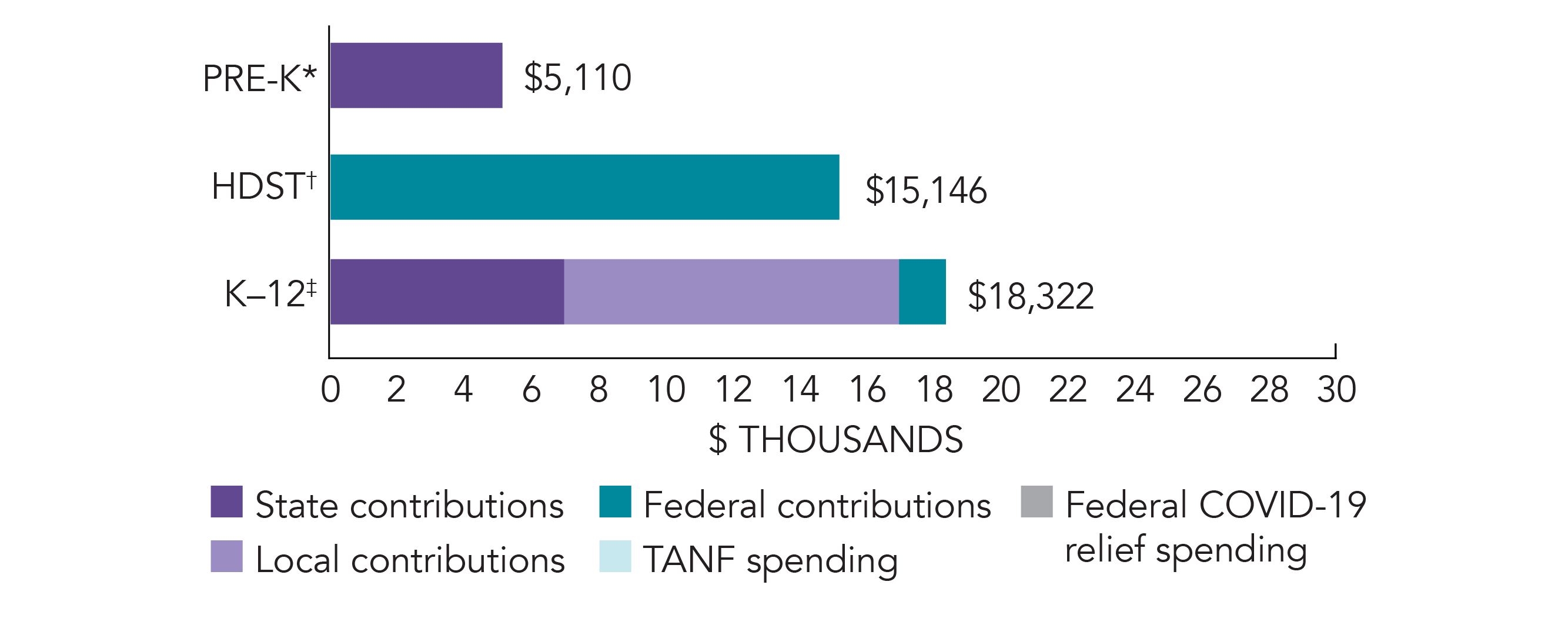
*Pre-K programs may receive additional funds from federal or local sources that are not included in this figure. †Head Start per-child spending includes funding only for 3- and 4-year-olds. ‡K–12 expenditures include capital spending as well as current operating expenditures.
Ohio Quality Standards Checklist
| Policy | Requirement | Benchmark | Meets Benchmark? |
|---|---|---|---|
For more information about the benchmarks, see the Executive Summary and the Roadmap to State pages. | 5benchmarks met | ||
| Early Learning & Development Standards Benchmark | Comprehensive, aligned, supported, culturally sensitive | Comprehensive, aligned, supported, culturally sensitive | |
| Curriculum Supports Benchmark | Approval process & supports | Approval process & supports | |
| Teacher Degree Benchmark | AA (50% BA) | BA | |
| Teacher Specialized Training Benchmark | ECE, CD, ECE SpEd (public); ECE, CD (nonpublic) | Specializing in pre-K | |
| Assistant Teacher Degree Benchmark | HSD | CDA or equivalent | |
| Staff Professional Development Benchmark | 12 clock hours/year; PD plans (teachers only) | For teachers & assistants: At least 15 hours/year; individual PD plans; coaching | |
| Maximum Class Size Benchmark | 24 (3-year-olds); 28 (4-year-olds) | 20 or lower | |
| Staff to Child Ratio Benchmark | 1:12 (3-year-olds); 1:14 (4-year-olds) | 1:10 or better | |
| Screening & Referral Benchmark | Vision, hearing, health & more | Vision, hearing & health screenings; & referral | |
| Continuous Quality Improvement System Benchmark | Structured classroom observations; Data used for program improvement | Structured classroom observations; data used for program improvement | |