State of Preschool
New Mexico
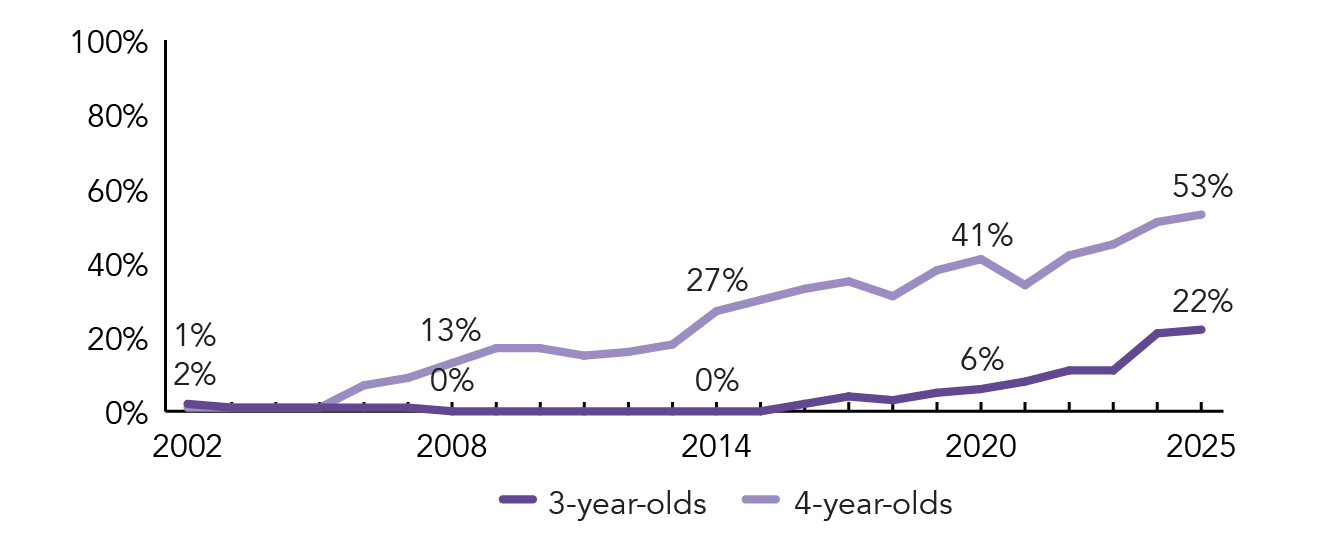
Access Rankings
4-year-Olds
11
3-year-Olds
7
Resource Rankings
State spending
5
All reported spending
7
Total Benchmarks Met
Of 10 benchmarks possible
9
Overview
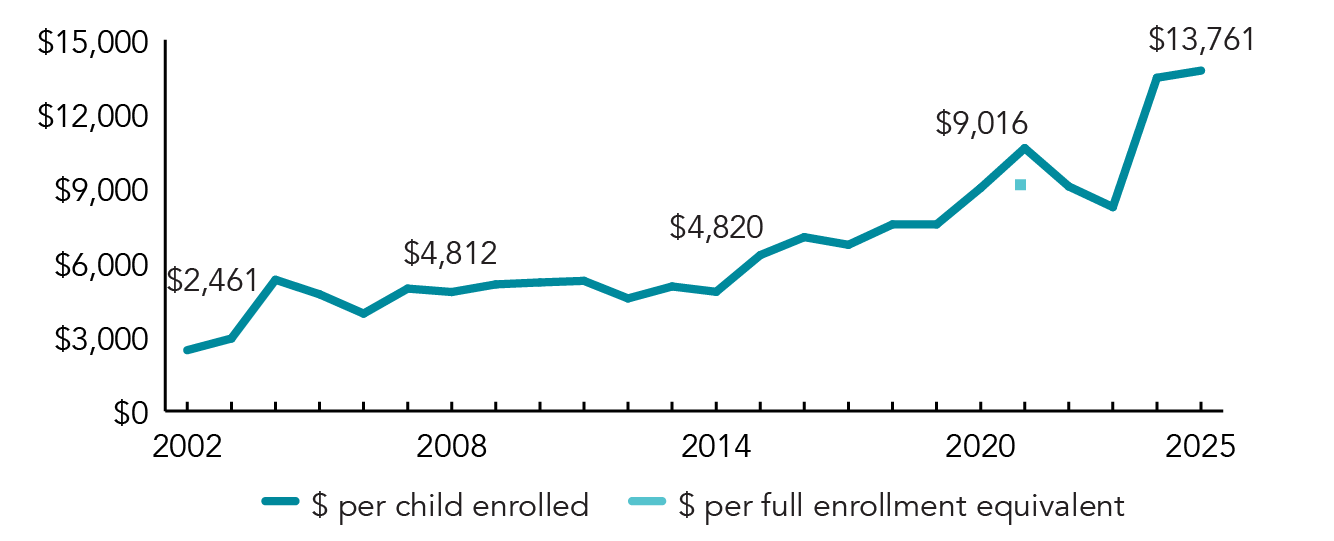
During the 2024-2025 school year, New Mexico PreK programs enrolled 16,429 children, an increase of 334 from the prior year. State spending totaled $226,084,608, up $9,246,573 (4%), adjusted for inflation, from the prior year. State spending per child equaled $13,761 in 2024-2025, up $289 from 2023-2024, adjusted for inflation. New Mexico met 9 of 10 quality standards benchmarks.
What's New
The New Mexico Early Childhood Education and Care Department (ECECD) funded 255 school-based and 330 community-based sites (home- and center-based), for a total of 585 NM PreK sites throughout the state. Additionally, ECECD awarded PreK funds to Head Start and Tribal Head Start grantees that blend these funding streams to provide early care and education to 3- and 4-year-olds in their
communities.
ECECD piloted the NM PreK Executive Function Program in the spring of 2025 utilizing the Minnesota Executive Function Scale. The pilot assessment was administered in 50 NM PreK classrooms, with 617 children across 19 programs during March and April 2025. During the pilot period, NM PreK administrators and educators also received professional development training in executive function and strategies to support developing these skills in their classrooms. Full implementation of the Executive Function Program in NM PreK began in the 2025-2026 school year.
Background
NM PreK launched in the 2005-2006 school year with the enactment of the Pre-Kindergarten Act. With the passage of the Early Childhood Education and Care Department Act in 2019, the program is now administered by ECECD, which funds and monitors NM PreK programs in both school-and community based settings. In the 2024-2025 school year, 94% of school districts, 10 charter schools, and 6 Tribal Programs offered NM PreK.
NM PreK funding is awarded through a competitive grant process, with priority given to programs in communities with public elementary schools designated as Title I. Two-thirds of enrolled children at each program site must live in the attendance zone of a Title I elementary school, though eligibility is not determined by family income.
The number of hours and days per week varies by program, with a minimum of 540 hours per year. In 2023-2024, the minimum hours for full-day NM PreK increased from 900 to 1,080 and the extended-plus program option provided a minimum of 1,380 hours over the full calendar year. In 2024-2025, 97% of all children enrolled were in a full-day Pre-K program. Some families access child care assistance funding to support wraparound care.
New Mexico PreK
Access
| |
| Total state pre-K enrollment | 16,429 |
| School districts that offer state program | 94% + 10 Charter Schools & 6 Tribal Programs |
| Income requirement | No income requirement |
| Minimum hours of operation | 3 hours/day |
| Operating schedule | Determined locally |
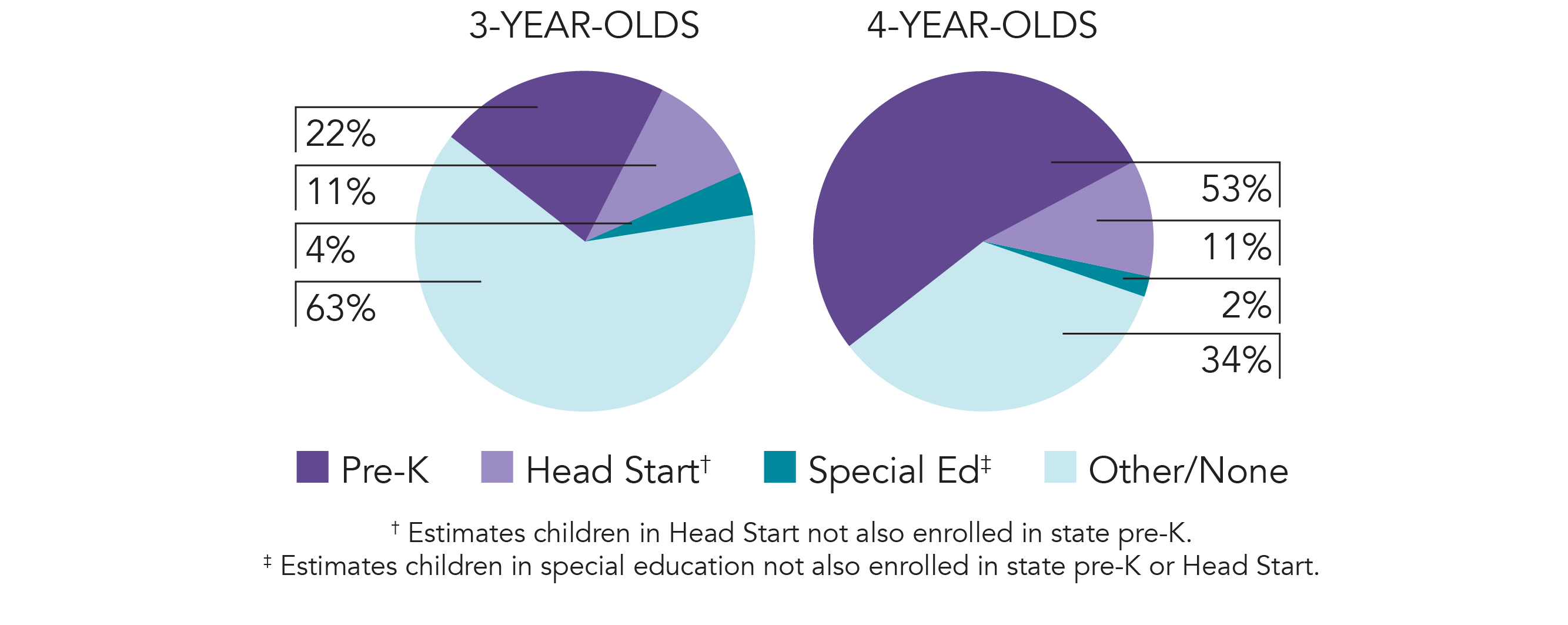
| Special education enrollment, ages 3 and 4 | 3,754 |
| Federally funded Head Start enrollment, ages 3 and 4 | 5,570 |
| State-funded Head Start enrollment, ages 3 and 4 | 0 |
Resources
| Total state pre-K spending | $226,084,608 |
| Local match required? | No |
| State Head Start spending | $4,791,968 |
| State spending per child enrolled | $13,761 |
| All reported spending per child enrolled* | $13,761 |
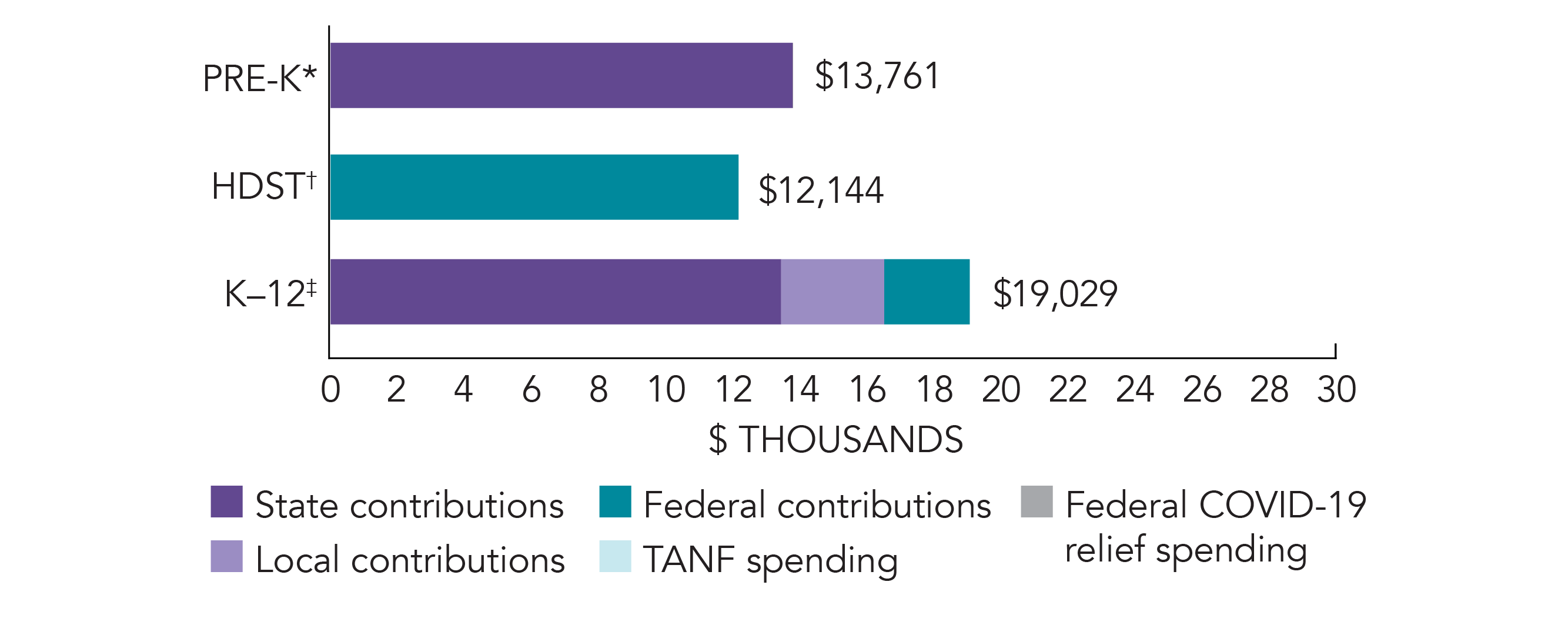
*Pre-K programs may receive additional funds from federal or local sources that are not included in this figure. †Head Start per-child spending includes funding only for 3- and 4-year-olds. ‡K–12 expenditures include capital spending as well as current operating expenditures.
New Mexico Quality Standards Checklist
| Policy | Requirement | Benchmark | Meets Benchmark? |
|---|---|---|---|
For more information about the benchmarks, see the Executive Summary and the Roadmap to State pages. | 9benchmarks met | ||
| Early Learning & Development Standards Benchmark | Comprehensive, aligned, supported, culturally sensitive | Comprehensive, aligned, supported, culturally sensitive | |
| Curriculum Supports Benchmark | Approval process & supports | Approval process & supports | |
| Teacher Degree Benchmark | BA in ECE (public); Working toward BA in ECE (nonpublic) | BA | |
| Teacher Specialized Training Benchmark | ECE, CD, ECE SpEd (public); ECE, CD (nonpublic) | Specializing in pre-K | |
| Assistant Teacher Degree Benchmark | AA in ECE | CDA or equivalent | |
| Staff Professional Development Benchmark | 24 hours/year; PD plans; Coaching | For teachers & assistants: At least 15 hours/year; individual PD plans; coaching | |
| Maximum Class Size Benchmark | 16 (3-year-olds); 20 (4-year-olds) | 20 or lower | |
| Staff to Child Ratio Benchmark | 1:8 (3-year-olds); 1:10 (4-year-olds) | 1:10 or better | |
| Screening & Referral Benchmark | Vision, hearing, health & more | Vision, hearing & health screenings; & referral | |
| Continuous Quality Improvement System Benchmark | Structured classroom observations; Data used for program improvement | Structured classroom observations; data used for program improvement | |