State of Preschool
New Jersey
Access Rankings
4-year-Olds
21
3-year-Olds
3
Resource Rankings
State spending
2
All reported spending
2
Total Benchmarks Met
Of 10 benchmarks possible
9
Overview
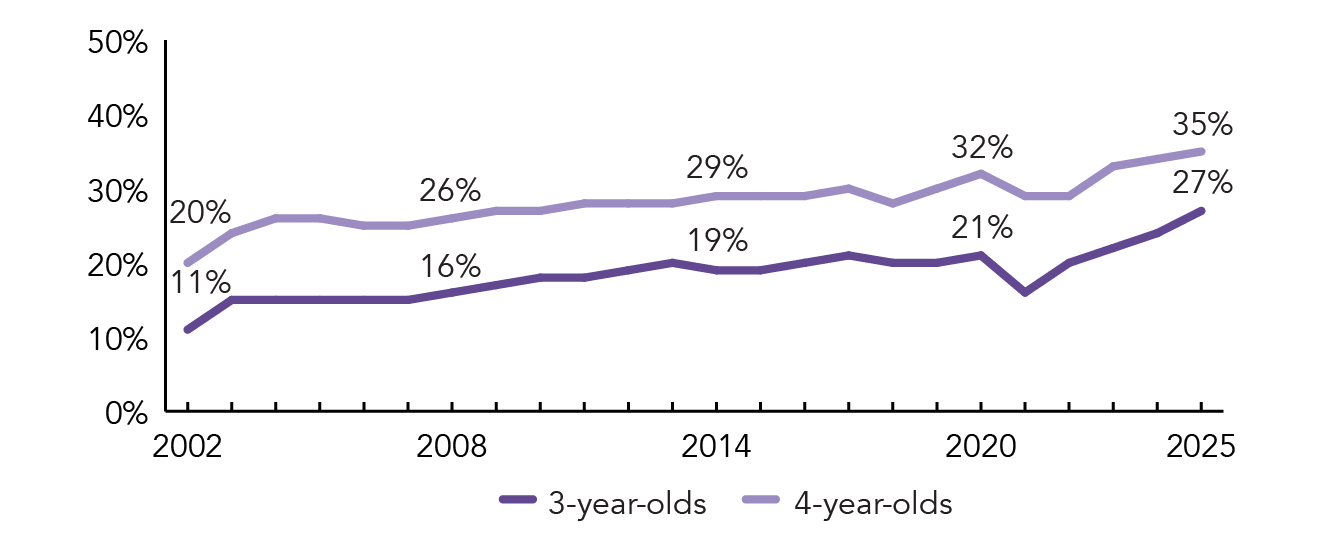
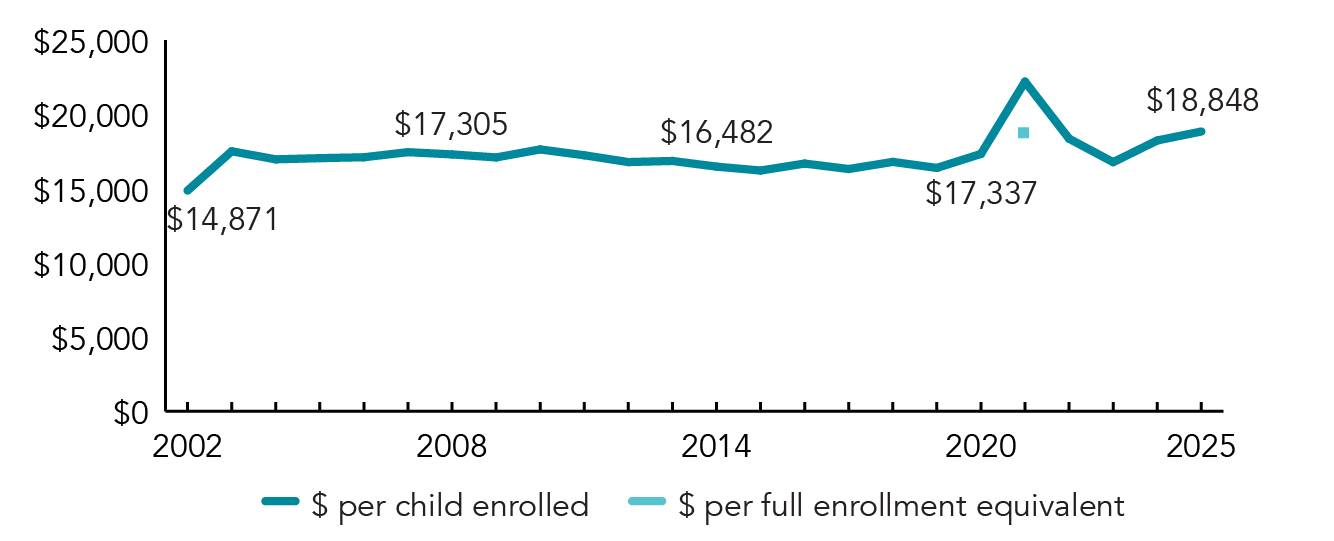
During the 2024-2025 school year, New Jersey preschool enrolled 65,365 children, an increase of 3,497 from the prior year. State spending totaled $1,231,974,000, up $103,290,612 (9%), adjusted for inflation, since last year. State spending per child equaled $18,848 in 2024-2025, up $604 from 2023-2024, adjusted for inflation. New Jersey met 9 of 10 quality standards benchmarks.
What's New
New Jersey continued to expand its state preschool program, supported by increased state investment and new statutory commitments. Governor Murphy allocated an additional $10 million in funding, allowing 18 more local education agencies to participate in preschool expansion, and provided pathways for districts previously funded through Early Childhood Program Aid (ECPA) and the Early Launch to Learning Initiative (ELLI) to transition into the expansion program as those programs sunsetted. In July 2025, the Universal Preschool and Kindergarten Expansion Law was enacted, codifying the preschool funding formula in statute, requiring annual preschool expansion awards from the New Jersey Department of Education, launching a three-year cost-sharing pilot to support districts, mandating statewide full-day kindergarten by 2030, and establishing a Preschool Expansion Steering Committee to guide implementation.
A new round of PDG B–5 Systems Building Grants were awarded to support states in building systems and strengthening their ECE programs that expand parental choice in a mixed-delivery system, improve system efficiency and collaboration, and raise the overall quality of programs. New Jersey received $3,250,719 in this latest round.
Background
New Jersey’s largest and most intensive program, formerly known as the Abbott Preschool Program, was originally established under a 1998 New Jersey Supreme Court mandate to serve all 3- and 4-year-olds in 31 of the state’s lowest income school districts. Since 2018, the state has expanded the program to include almost 300 school districts that are approved to expand their preschool programs to meet Abbott standards. The NJDOE funds these districts to provide a full-day program to resident 3- and 4-year olds, with the goal of growing to reach 90% of the preschool-age population. The original 31 Abbott districts are required to contract with licensed private child care centers or Head Start programs that meet state standards. All other districts are required to contract with willing and able Head Start agencies, and encouraged to contract with private child care.
As noted above, the state is in the process of phasing out the ECPA and ELLI programs, which now operate in less than a dozen school districts.
New Jersey State Overview
Access
| |
| Total state pre-K enrollment | 65,365 |
| School districts that offer state program | 48% |
| Income requirement | No income requirement |
| Minimum hours of operation | 6 hours/day (Abbott/Expansion), 2.5 hours/day (ECPA & ELLI); 5 days/week |
| Operating schedule | School or academic year |
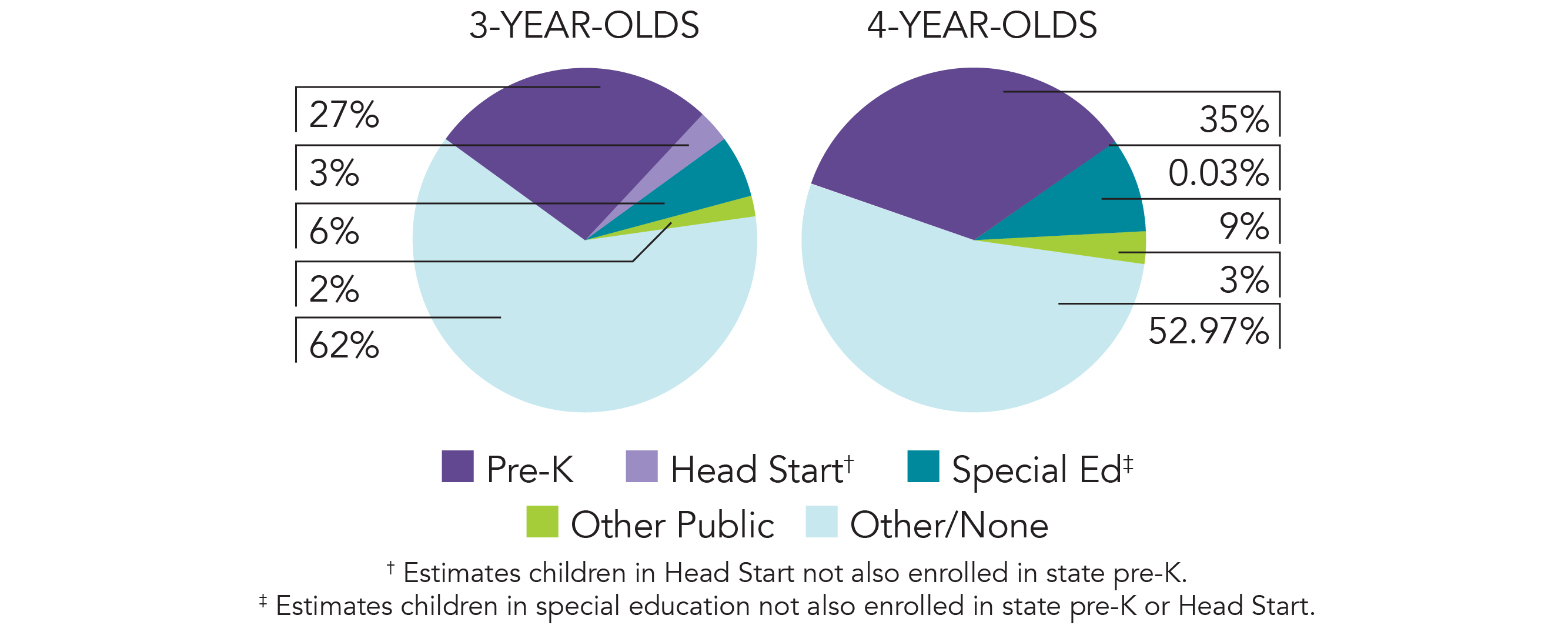
| Special education enrollment, ages 3 and 4 | 16,682 |
| Federally funded Head Start enrollment, ages 3 and 4 | 9,082 |
| State-funded Head Start enrollment, ages 3 and 4 | 0 |
Resources
| Total state pre-K spending | $1,231,974,000 |
| Local match required? | No |
| State Head Start spending | $55,687,429 |
| State spending per child enrolled | $18,848 |
| All reported spending per child enrolled* | $18,848 |
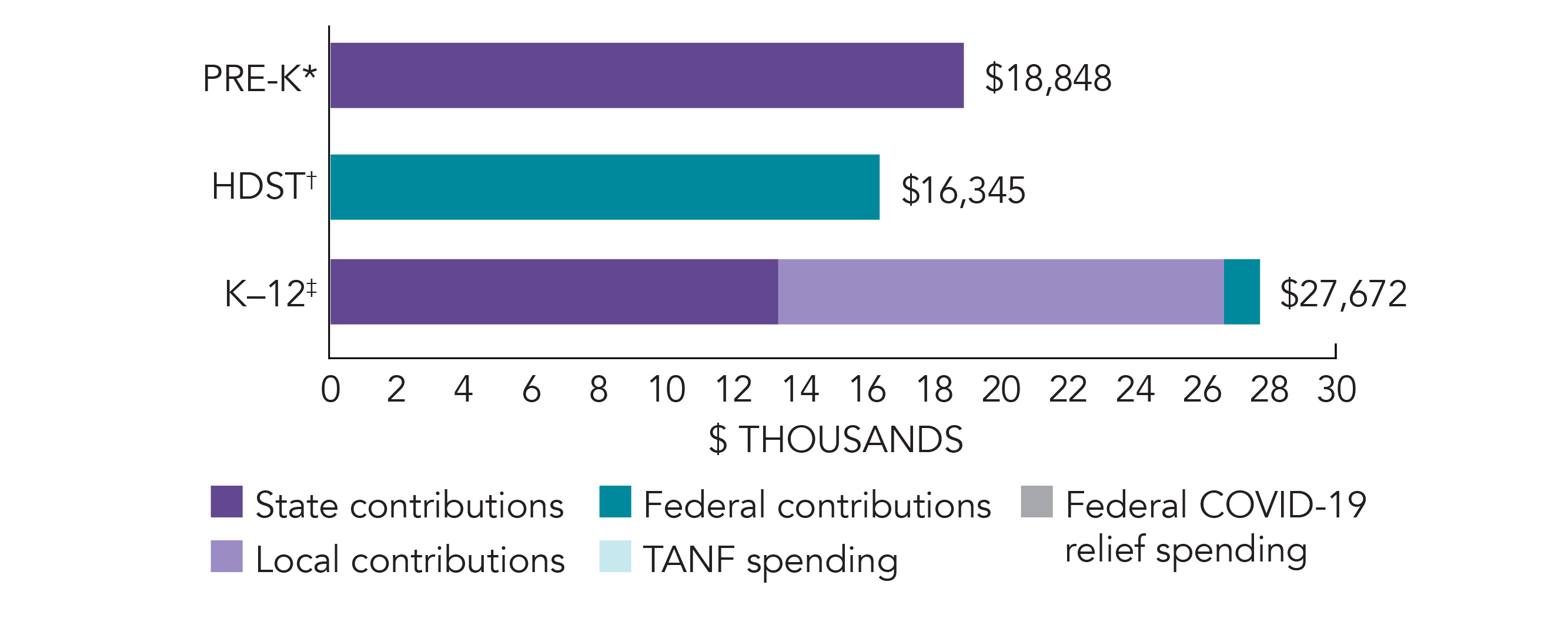
*Pre-K programs may receive additional funds from federal or local sources that are not included in this figure. †Head Start per-child spending includes funding only for 3- and 4-year-olds. ‡K–12 expenditures include capital spending as well as current operating expenditures.
New Jersey Quality Standards Checklist
| Policy | Requirement | Benchmark | Meets Benchmark? |
|---|---|---|---|
For more information about the benchmarks, see the Executive Summary and the Roadmap to State pages. | 9benchmarks met | ||
| Early Learning & Development Standards Benchmark | Comprehensive, aligned, supported, culturally sensitive | Comprehensive, aligned, supported, culturally sensitive | |
| Curriculum Supports Benchmark | Approval process & supports | Approval process & supports | |
| Teacher Degree Benchmark | BA | BA | |
| Teacher Specialized Training Benchmark | ECE | Specializing in pre-K | |
| Assistant Teacher Degree Benchmark | HSD | CDA or equivalent | |
| Staff Professional Development Benchmark | 100 hours/5 years; PD plans; Coaching | For teachers & assistants: At least 15 hours/year; individual PD plans; coaching | |
| Maximum Class Size Benchmark | 15 (Abbott/Expansion); 18 (ECPA); 20 (ELLI) | 20 or lower | |
| Staff to Child Ratio Benchmark | 2:15 (Abbott/Expansion); 1:9 (ECPA); 1:10 (ELLI) | 1:10 or better | |
| Screening & Referral Benchmark | Vision, hearing, health & more | Vision, hearing & health screenings; & referral | |
| Continuous Quality Improvement System Benchmark | Structured classroom observations; Data used for program improvement | Structured classroom observations; data used for program improvement | |