State of Preschool
Indiana
Access Rankings
4-year-Olds
N/A
3-year-Olds
N/A
Resource Rankings
State spending
N/A
All reported spending
N/A
Total Benchmarks Met
Of 10 benchmarks possible
2
Overview
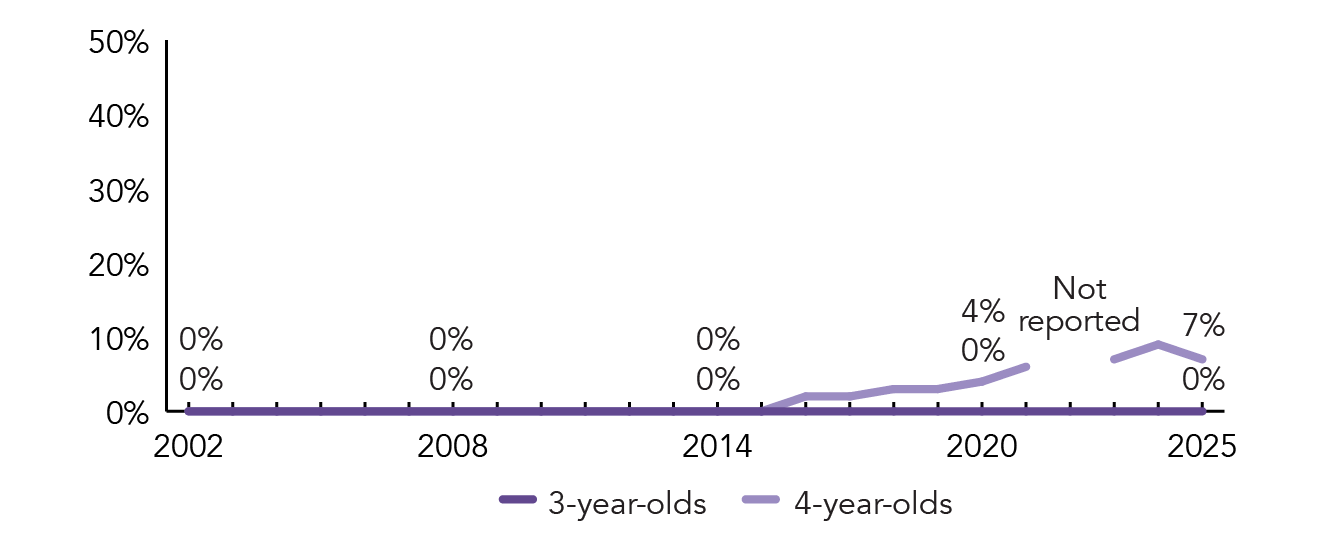
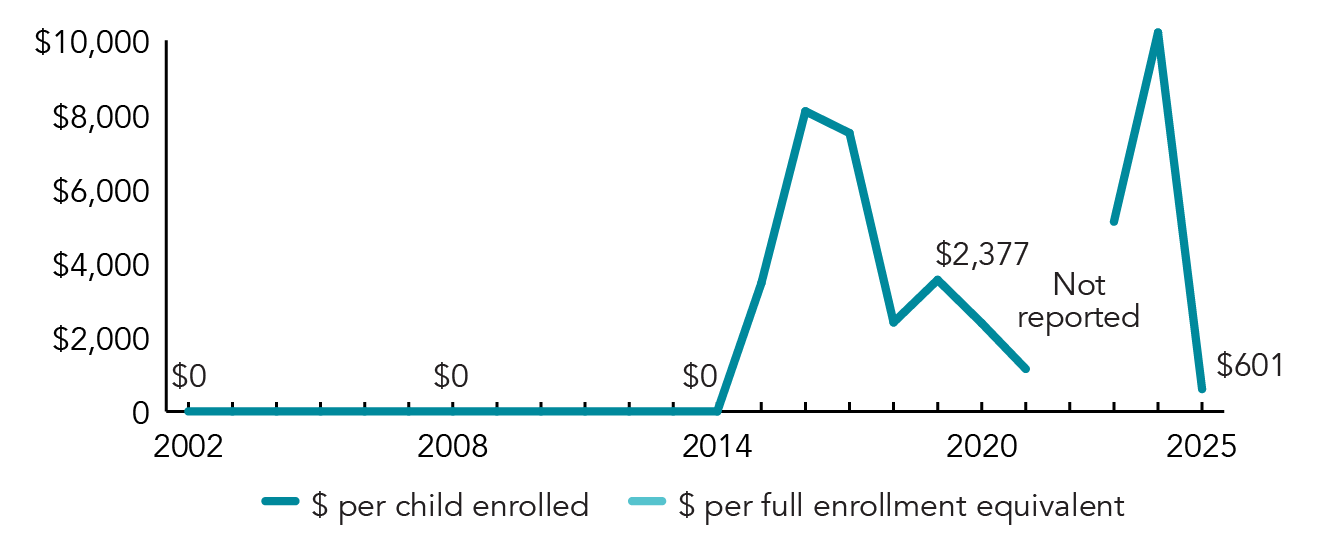
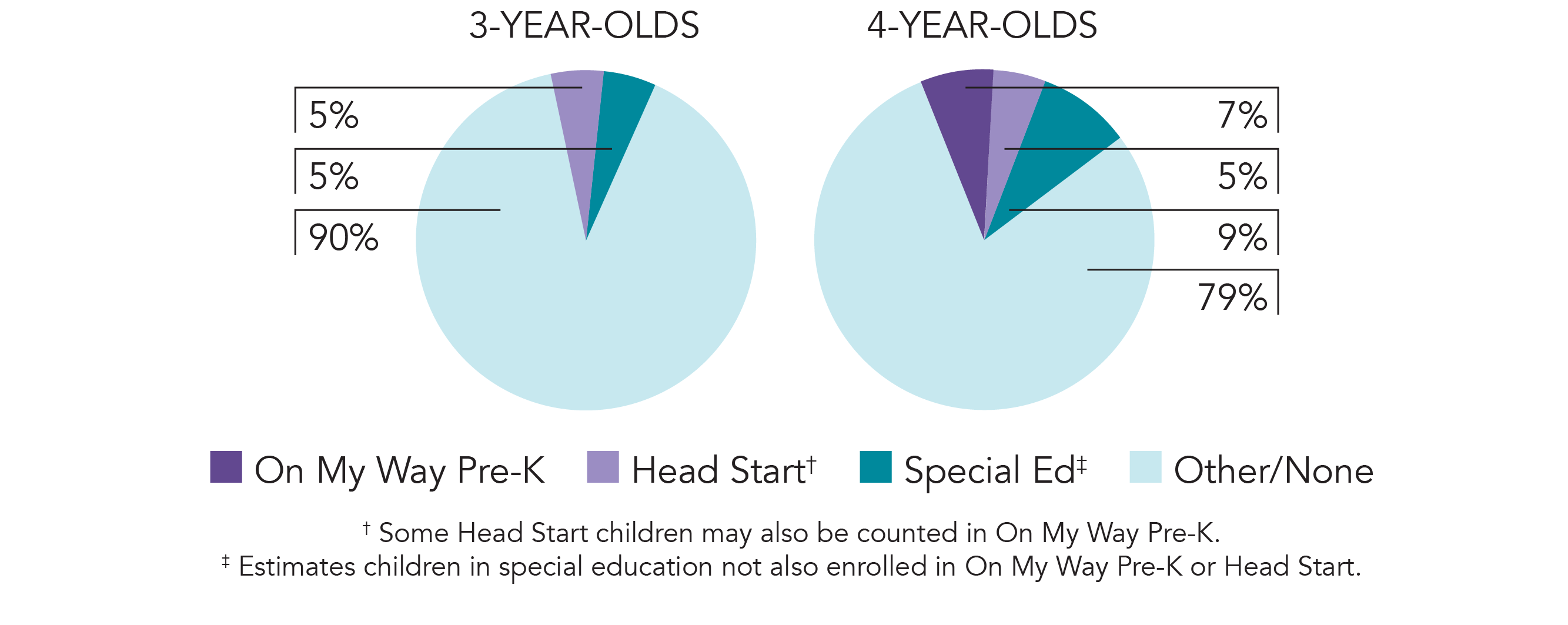
During the 2024-2025 school year, Indiana preschool enrolled 6,018 4-year-olds, a decrease of 1,930 from the prior year. State spending totaled $3,616,054 but the state was not able to report the amount of federal Covid-relief funds used to support the program. State spending per child equaled $601 in 2024-2025. Indiana met 2 of 10 quality standards benchmarks.
On My Way Pre-K (OMWPK) has a parent employment or school requirement for eligibility and therefore does not meet NIEER’s definition of a state-funded preschool program. The program is included in the report but not in national totals or rankings.
What's New
Effective March 31, 2024, the Indiana General Assembly increased OMWPK eligibility to 150% FPL, up from 127%, which made more families eligible to participate in a voucher program.
In December 2025, Indiana was awarded a federal PDG B–5 Systems Building Grant totaling $14,680,302 to build on the progress of the last three years through previous PDG B-5 Grant’s activities, needs assessment, and strategic plan, and to design a new public- private intermediary structure for Indiana’s ECE system.
The State will do this by piloting a referral slots approach for children under three to meet the significant need for high-quality, affordable child care. The goal is 1,000 slots in 2026. The State will also partner with and leverage the ability of the Indiana Economic Development Corporation to promote economic growth, develop talent, and fuel innovation and entrepreneurship by expanding the micro-facility pilot, provide business supports to all ECE businesses, and leverage new opportunities through the expansion of the 45F employer-sponsored child care tax credit. Finally, the State will create an implementation plan for a new private-public intermediary structure that will create efficiencies, provide flexibility, increase revenue, and strengthen the private-public connection between Indiana’s ECE system.
Background
The On My Way Pre-K (OMWPK) program was signed into law in 2014 to provide vouchers to eligible, low-income four-year-old children for qualified early education services statewide. Services may be delivered via public schools, licensed, or registered child care programs that have achieved Level Three or Level Four in Paths to QUALITY™, or via accredited private schools.
According to the Purdue University longitudinal study, children who attended the OMWPK program had stronger school readiness, language, and literacy skills than their peers with similar family incomes who attended lower quality child care or prekindergarten programs. Additional research by Purdue University is studying the use of curricula in Indiana and identifying the key ingredients of high-quality preschool programs. A second longitudinal study began in fall 2024. Additionally, OMWPK children have matched up positively compared to national norms established for all pre-kindergarten children in the annual Kindergarten Readiness Indicators assessment, conducted by the National Opinion Research Center (NORC) at the University of Chicago.
OMWPK has stimulated the expansion of the number of high-quality programs in Indiana, affecting not only the 4-year-old children enrolled with state funding, but all other children enrolled in those programs. There has been a stable 92% increase in high quality early care and education programs for all children statewide since the inception of OMWPK.
Indiana On My Way PRE-K
Access
| |
| Total state pre-K enrollment | 6,018 |
| School districts that offer state program | 96% (counties) |
| Income requirement | 150% FPL |
| Minimum hours of operation | 2.5 hours/day; 5 days/week |
| Operating schedule | School or academic year |
| Special education enrollment, ages 3 and 4 | 13,047 |
| Federally funded Head Start enrollment, ages 3 and 4 | 7,904 |
| State-funded Head Start enrollment, ages 3 and 4 | 0 |
Resources
| Total state pre-K spending | $3,616,054 |
| Local match required? | Yes |
| State Head Start spending | $0 |
| State spending per child enrolled | $601 |
| All reported spending per child enrolled* | $8,762 |
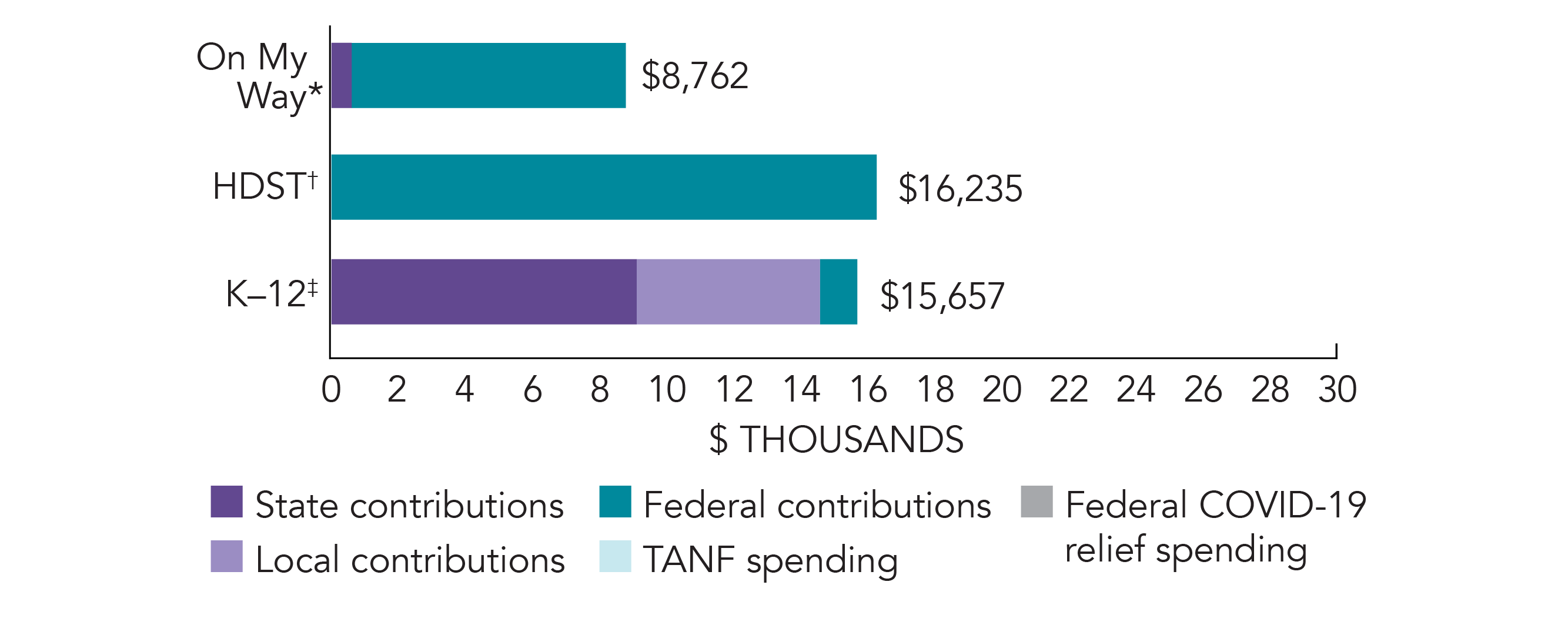
*Pre-K programs may receive additional funds from federal or local sources that are not included in this figure. †Head Start per-child spending includes funding only for 3- and 4-year-olds. ‡K–12 expenditures include capital spending as well as current operating expenditures.
Indiana Quality Standards Checklist
| Policy | Requirement | Benchmark | Meets Benchmark? |
|---|---|---|---|
For more information about the benchmarks, see the Executive Summary and the Roadmap to State pages. | 2benchmarks met | ||
| Early Learning & Development Standards Benchmark | Comprehensive, aligned, supported, culturally sensitive | Comprehensive, aligned, supported, culturally sensitive | |
| Curriculum Supports Benchmark | Approval process & supports | Approval process & supports | |
| Teacher Degree Benchmark | Varies by program requirements | BA | |
| Teacher Specialized Training Benchmark | Varies by program requirements | Specializing in pre-K | |
| Assistant Teacher Degree Benchmark | HSD | CDA or equivalent | |
| Staff Professional Development Benchmark | 12 hours/year; PD plans (public teachers) | For teachers & assistants: At least 15 hours/year; individual PD plans; coaching | |
| Maximum Class Size Benchmark | 20 (3-year-olds); 24 (4-year-olds) | 20 or lower | |
| Staff to Child Ratio Benchmark | 1:10 (3-year-olds); 1:12 (4-year-olds) | 1:10 or better | |
| Screening & Referral Benchmark | Immunizations; Referrals not required | Vision, hearing & health screenings; & referral | |
| Continuous Quality Improvement System Benchmark | Site Visits | Structured classroom observations; data used for program improvement | |