State of Preschool
Hawaii
Access Rankings
4-year-Olds
43
3-year-Olds
25
Resource Rankings
State spending
16
All reported spending
28
Total Benchmarks Met
Of 10 benchmarks possible
10*
Overview
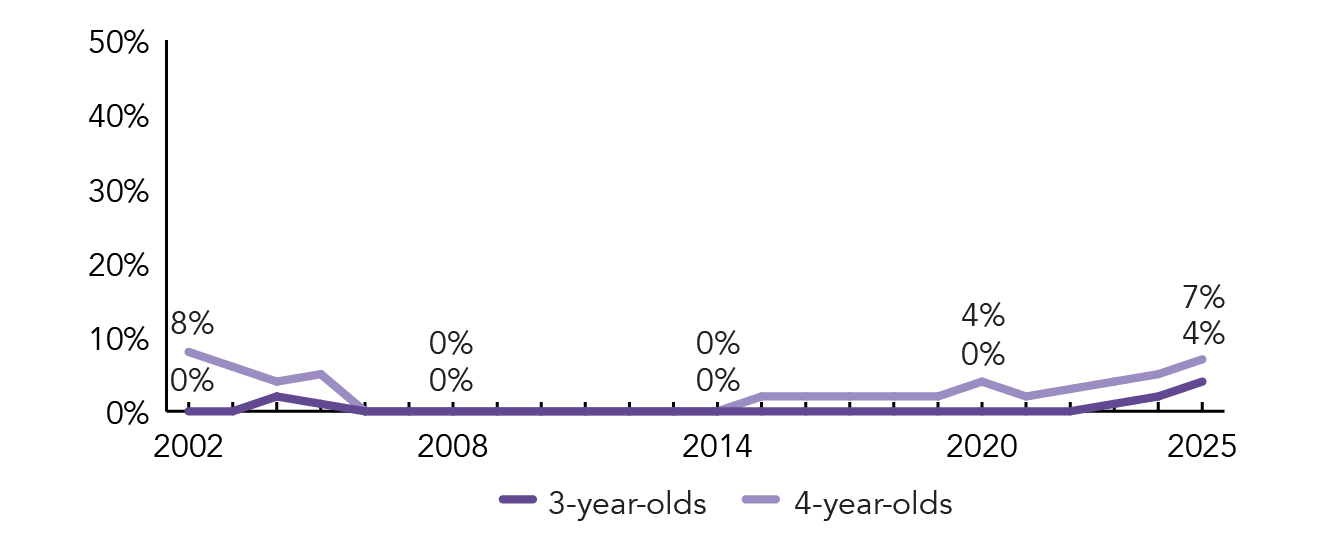
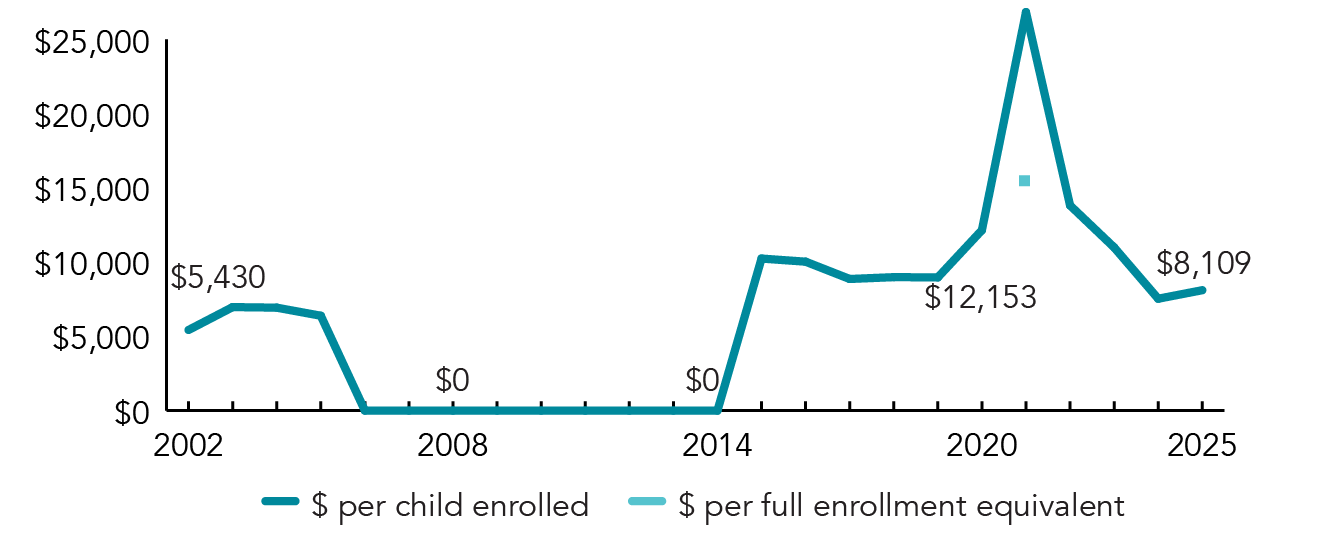
During the 2024-2025 school year, Hawaii preschool enrolled 1,637 children, an increase of 611 from the prior year. State spending totaled $13,273,747, up $5,542,752 (72%), adjusted for inflation, since last year. State spending per child equaled $8,109 in 2024-2025, up $573 from 2023-2024, adjusted for inflation. Hawaii met 10 of 10 quality standards benchmarks.
What's New
The State Legislature supported the addition of new classrooms for the Executive Office on Early Learning (EOEL) Public Prekindergarten Program over the 2025-2026 program year through the State of Hawaii Budget Process. With the addition of new resources, the EOEL Public Prekindergarten Program is now able to serve 2,275 students in 117 classrooms statewide during the 2025- 2026 program year.
Through the Ready Keiki Initiative, together with community partners, the Hawaii State Public Charter School Commission embraced the shared goal for the state of Hawaii aligned with Act 46 (SLH 2020) as amended by Act 210 (SLH 2021): 1) To meet fifty percent of unserved 3 and 4-year-old keiki by 2027; 2) To meet one hundred percent of unserved 3 and 4-year-old keiki by 2032; 3) To honor the two educational pathways in Olelo Hawaii (Hawaiian language) and English; 4) To commit to working collaboratively as partners to address the challenges; and 5) To maximize the use of Act 257, (SLH 2022), which invests $200 million to expand early learning facilities.
To effectuate this plan, the Commission envisioned implementing the following: 1) Create a new pathway to increase access to pre-K programs in charter schools; 2) Maximize the use of Act 257, SLH 2022, to expand early learning facilities in charter schools; 3) Develop a pre-K-only charter application to expand pre-K-only charter schools; and 4) Communicate unified support for high-quality pre-K for all of Hawaii keiki. In addition to the programs detailed here, Hawaii’s Preschool Open Doors (POD) provides subsidies to families with children age 2 to 5 and broadened the income eligibility threshold policy to 500% of the federal poverty level. The child care subsidy program helps low-income families to sustain their employment, educational efforts, and job training by paying a subsidy for their children who are in the care of Department of Human Services-approved child care providers.
Background
In Hawaii, the EOEL Public Prekindergarten Program serves 3- and 4-year-old children, with priority given to students considered “at- risk,” including those from low-income families, now defined as 300% FPL. The EOEL Public Prekindergarten Program is required to operate on the same schedule as public elementary schools, providing services for 1,080 hours a year. EOEL expanded its eligibility to include three- and four-year-olds in the 2022-2023 school year.
Beginning in SY 2020-2021, through Act 46, SLH 2020, the legislature gave statutory authority to the State Public Charter School Commission to administer the early learning program in charter schools. Act 46, SLH 2020, also changed the eligibility criteria to include three- and four-year-old children.
Teachers in the EOEL Public Prekindergarten Program and the Hawaii State Public Charter School (SPCSC) Early Learning Program are part of the Hawaii State Teachers Association and, as such, receive salary and benefit parity with teachers in K–12 classrooms. Lead teachers in both programs are required to have a bachelor’s degree with licensure in ECE, while assistant teachers are required to have a CDA credential or coursework for a certificate that meets the requirements for child development associate credential preparation. The EOEL Public Prekindergarten Program and the SPCSC Early Learning Program classrooms receive CLASS observations twice a year, and formative child assessments using Teaching Strategies GOLD are conducted throughout the year with three checkpoints. In addition, all programs undergo fiscal monitoring annually, and program records are reviewed more than once per year.
-
Access

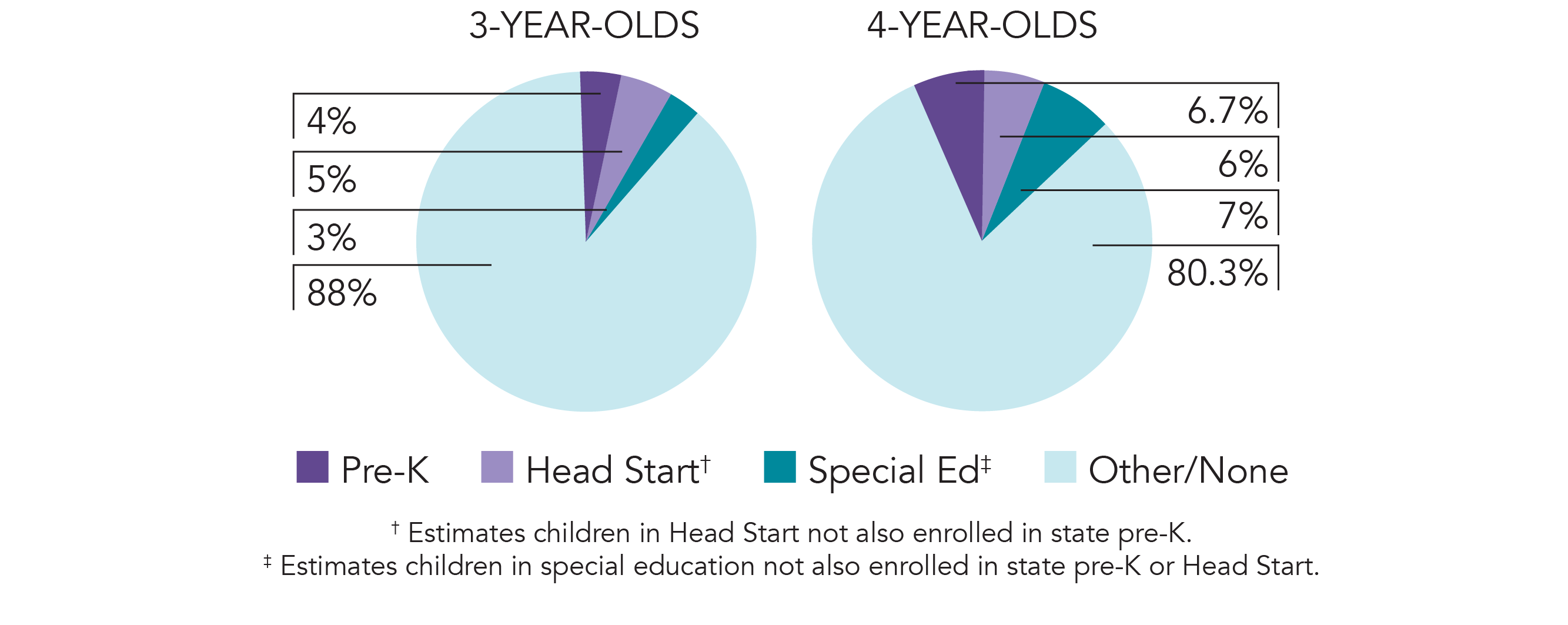
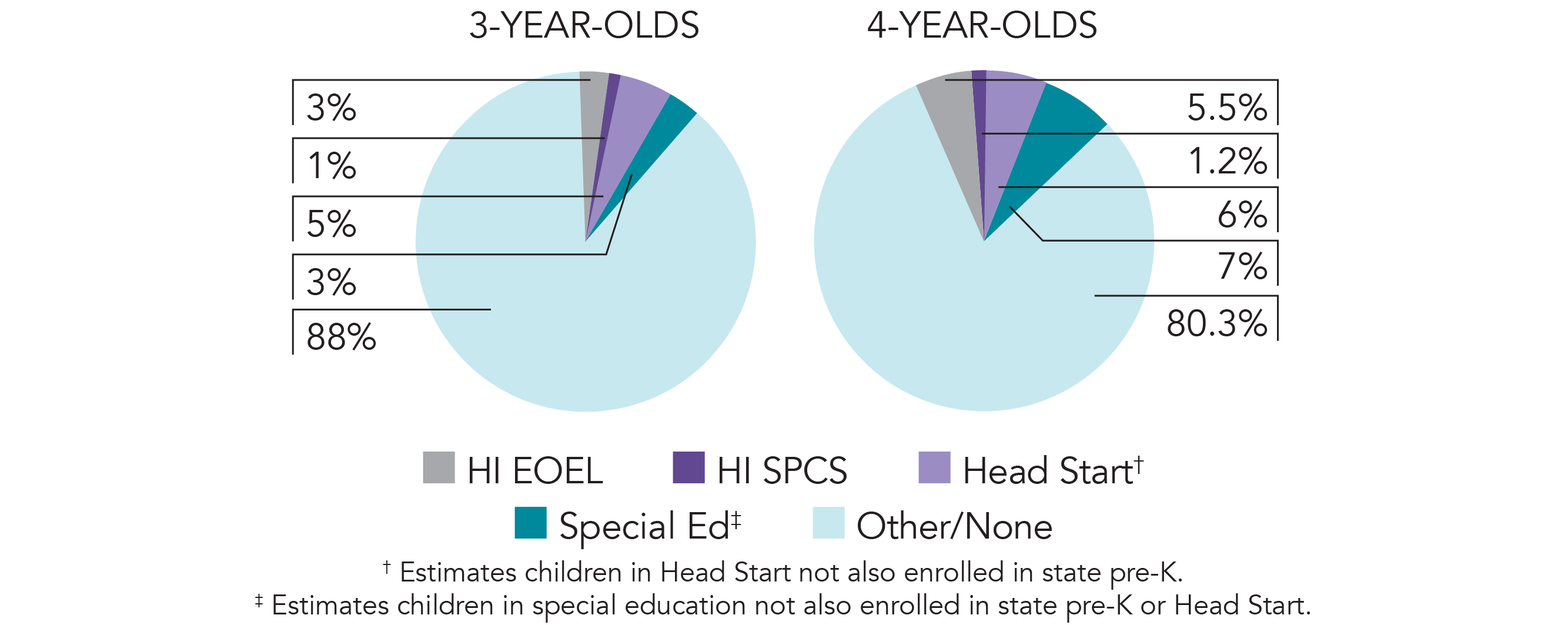
Total state pre-K enrollment 1,637 Special education enrollment, ages 3 and 4 1,957 Federally funded Head Start enrollment, ages 3 and 4 1,745 State-funded Head Start enrollment, ages 3 and 4 0 Resources
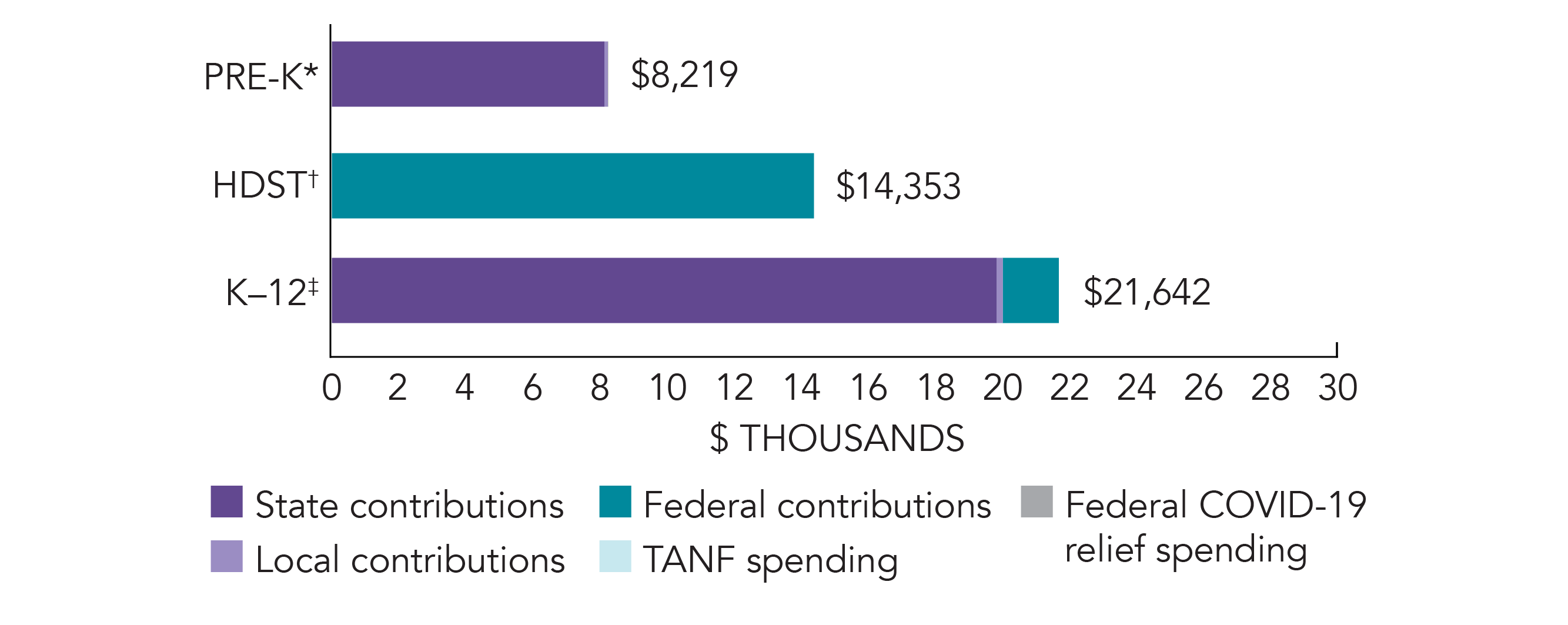
Total state pre-K spending $13,273,747 State Head Start spending $0 State spending per child enrolled $8,109 All reported spending per child enrolled* $8,219 
*Pre-K programs may receive additional funds from federal or local sources that are not included in this figure. †Head Start per-child spending includes funding only for 3- and 4-year-olds. ‡K–12 expenditures include capital spending as well as current operating expenditures.
-
Access

Total state pre-K enrollment 1,361 School districts that offer state program 100% (complex areas) Income requirement No income requirement Minimum hours of operation 30.5 hours/week; 5 days/week Operating schedule School or academic year Resources
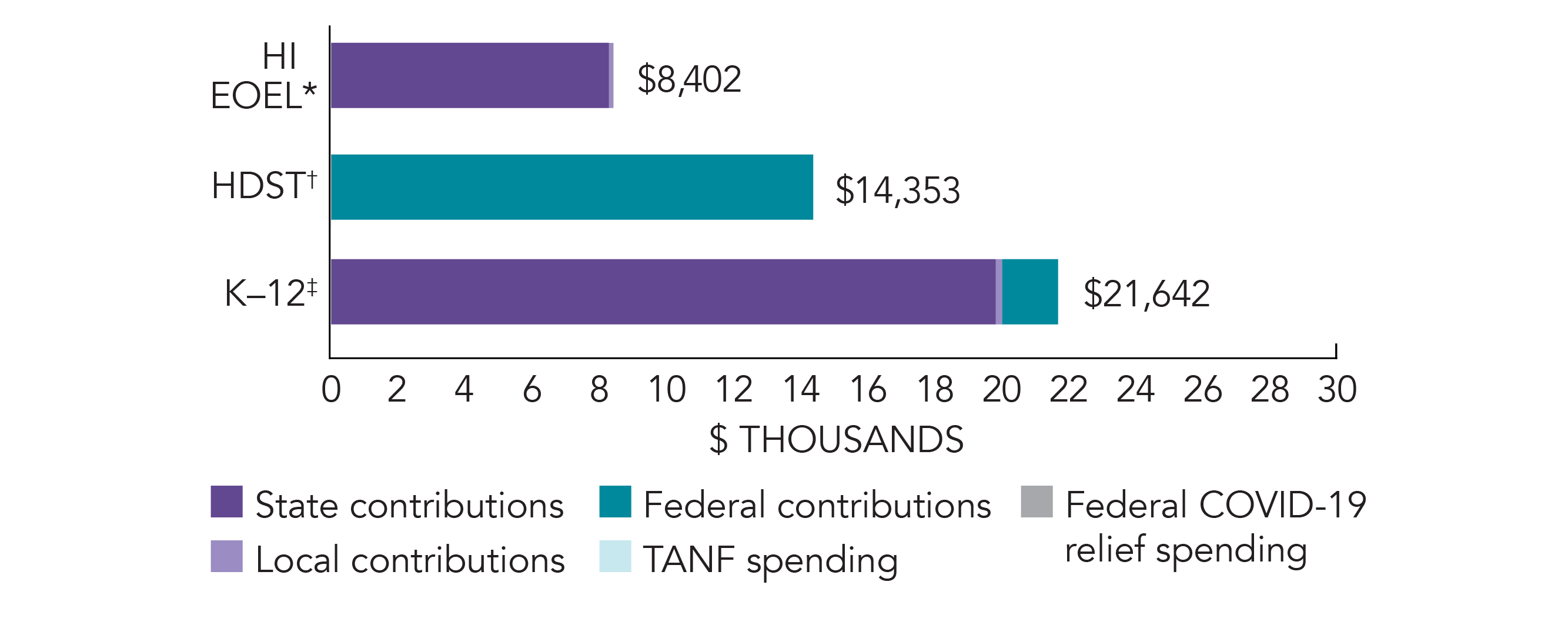
Total state pre-K spending $11,254,669 Local match required? No State spending per child enrolled $8,269 All reported spending per child enrolled* $8,402 
*Pre-K programs may receive additional funds from federal or local sources that are not included in this figure. †Head Start per-child spending includes funding only for 3- and 4-year-olds. ‡K–12 expenditures include capital spending as well as current operating expenditures.
Hawaii's Executive Office on Early Learning Public Prekindergarten Quality Standards Checklist
| Policy | HI EOEL Requirement | Benchmark | Meets Benchmark? |
|---|---|---|---|
For more information about the benchmarks, see the Executive Summary and the Roadmap to State pages. | 10benchmarks met | ||
| Early Learning & Development Standards Benchmark | Comprehensive, aligned, supported, culturally sensitive | Comprehensive, aligned, supported, culturally sensitive | |
| Curriculum Supports Benchmark | Approval process & supports | Approval process & supports | |
| Teacher Degree Benchmark | BA | BA | |
| Teacher Specialized Training Benchmark | ECE, CD | Specializing in pre-K | |
| Assistant Teacher Degree Benchmark | CDA | CDA or equivalent | |
| Staff Professional Development Benchmark | 60 hours/year (teachers & assistants); PD plans, Coaching | For teachers & assistants: At least 15 hours/year; individual PD plans; coaching | |
| Maximum Class Size Benchmark | 20 (3- & 4-year-olds) | 20 or lower | |
| Staff to Child Ratio Benchmark | 1:10 (3- & 4-year-olds) | 1:10 or better | |
| Screening & Referral Benchmark | Full physical exam (includes vision & hearing); Referrals | Vision, hearing & health screenings; & referral | |
| Continuous Quality Improvement System Benchmark | Structured classroom observations; Data used for program improvement | Structured classroom observations; data used for program improvement | |
-
Access
Total state pre-K enrollment 276 School districts that offer state program 53% (complex areas) Income requirement No income requirement Minimum hours of operation 30.5 hours/week; 5 days/week Operating schedule School or academic year Resources
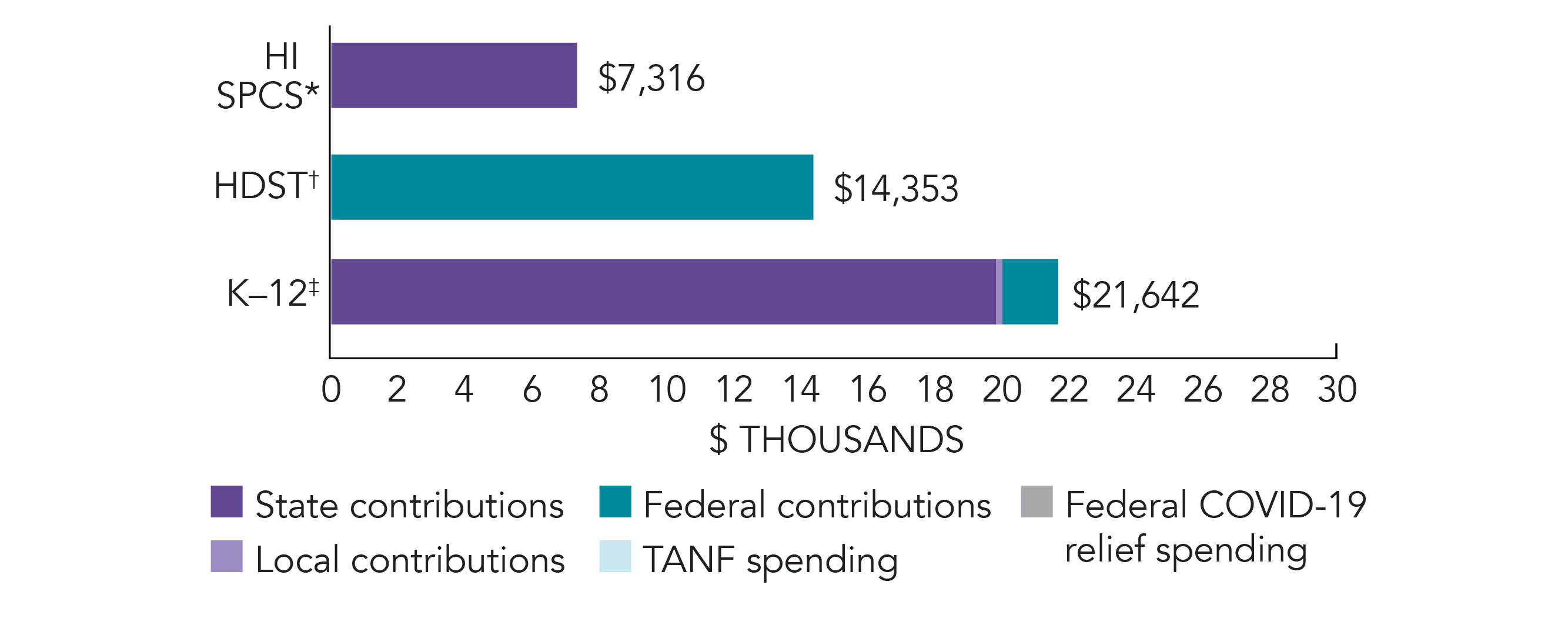
Total state pre-K spending $2,019,078 Local match required? No State spending per child enrolled $7,316 All reported spending per child enrolled* $7,316 
*Pre-K programs may receive additional funds from federal or local sources that are not included in this figure. †Head Start per-child spending includes funding only for 3- and 4-year-olds. ‡K–12 expenditures include capital spending as well as current operating expenditures.
Hawaii State Public Charter School Early Learning Program Quality Standards Checklist
| Policy | HI SPCSP Requirement | Benchmark | Meets Benchmark? |
|---|---|---|---|
For more information about the benchmarks, see the Executive Summary and the Roadmap to State pages. | 10*benchmarks met | ||
| Early Learning & Development Standards Benchmark | Comprehensive, aligned, supported, culturally sensitive | Comprehensive, aligned, supported, culturally sensitive | |
| Curriculum Supports Benchmark | Approval process & supports | Approval process & supports | |
| Teacher Degree Benchmark | BA* | BA | |
| Teacher Specialized Training Benchmark | ECE, CD | Specializing in pre-K | |
| Assistant Teacher Degree Benchmark | CDA | CDA or equivalent | |
| Staff Professional Development Benchmark | 60 hours/year (teachers & assistants); PD plans, Coaching | For teachers & assistants: At least 15 hours/year; individual PD plans; coaching | |
| Maximum Class Size Benchmark | 20 (3- & 4-year-olds) | 20 or lower | |
| Staff to Child Ratio Benchmark | 1:10 (3- & 4-year-olds) | 1:10 or better | |
| Screening & Referral Benchmark | Full physical exam (includes vision & hearing); Referrals | Vision, hearing & health screenings; & referral | |
| Continuous Quality Improvement System Benchmark | Structured classroom observations; Data used for program improvement | Structured classroom observations; data used for program improvement | |
* Indicates that while policy meets the benchmark, it is not being implemented fully