State of Preschool
Alabama
Access Rankings
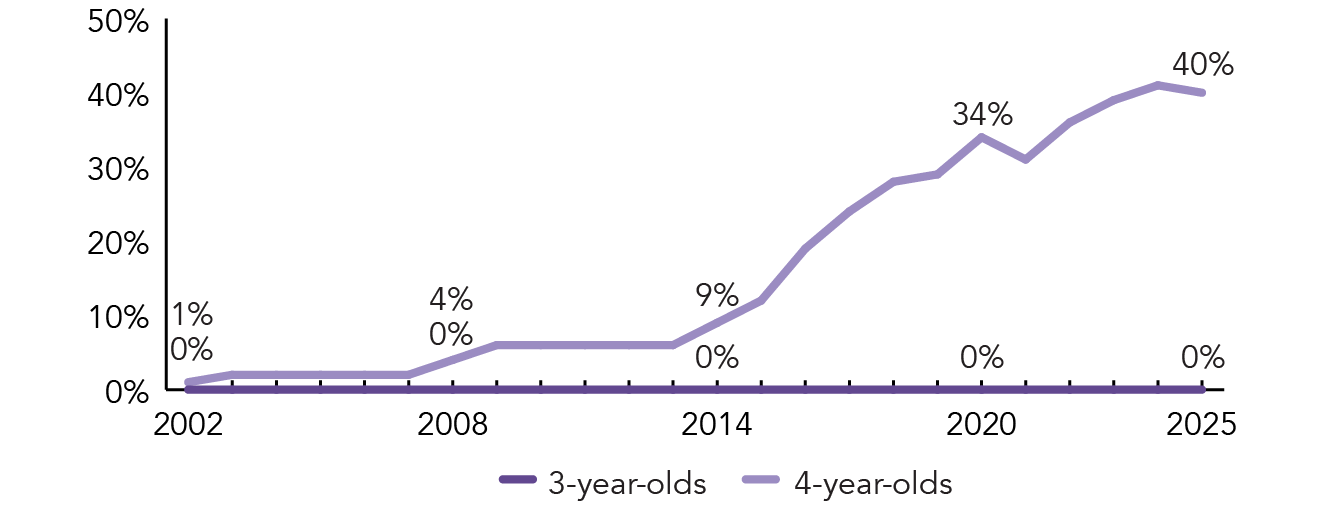
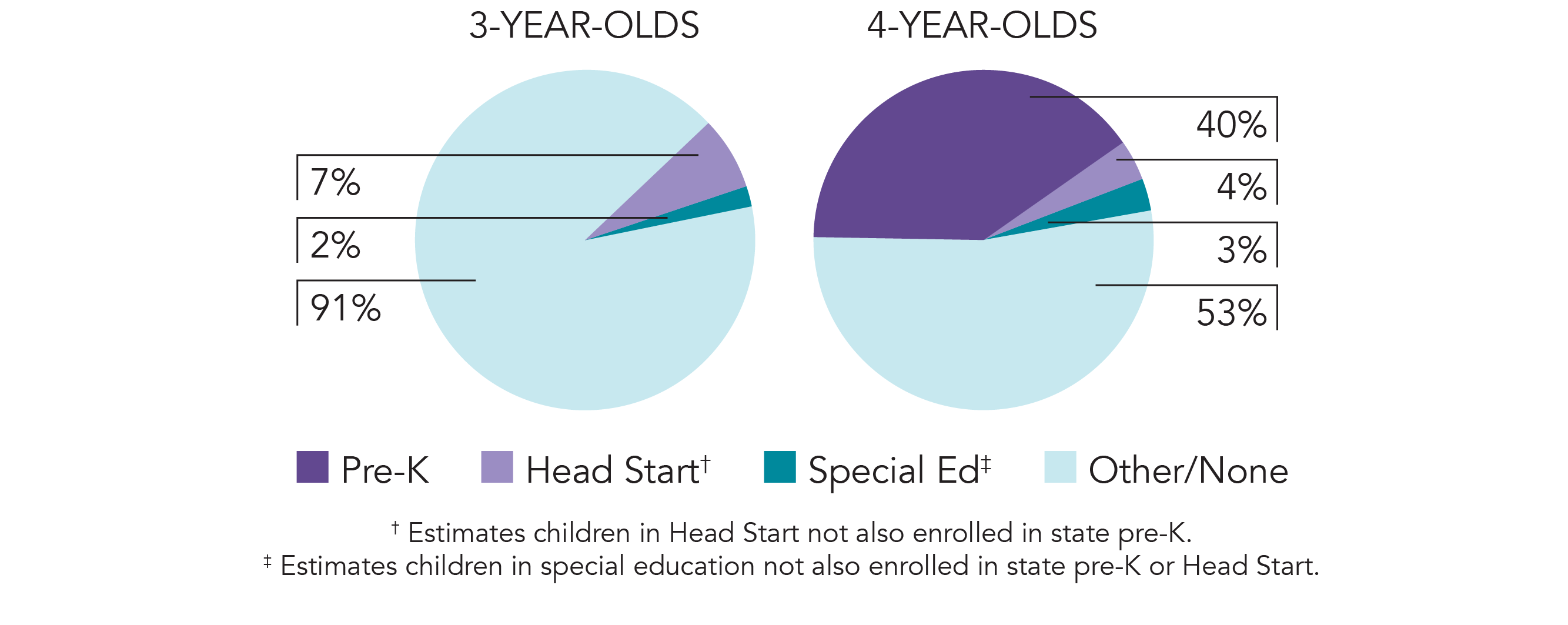
4-year-Olds
18
3-year-Olds
Not served
Resource Rankings
State spending
18
All reported spending
17
Total Benchmarks Met
Of 10 benchmarks possible
10
Overview
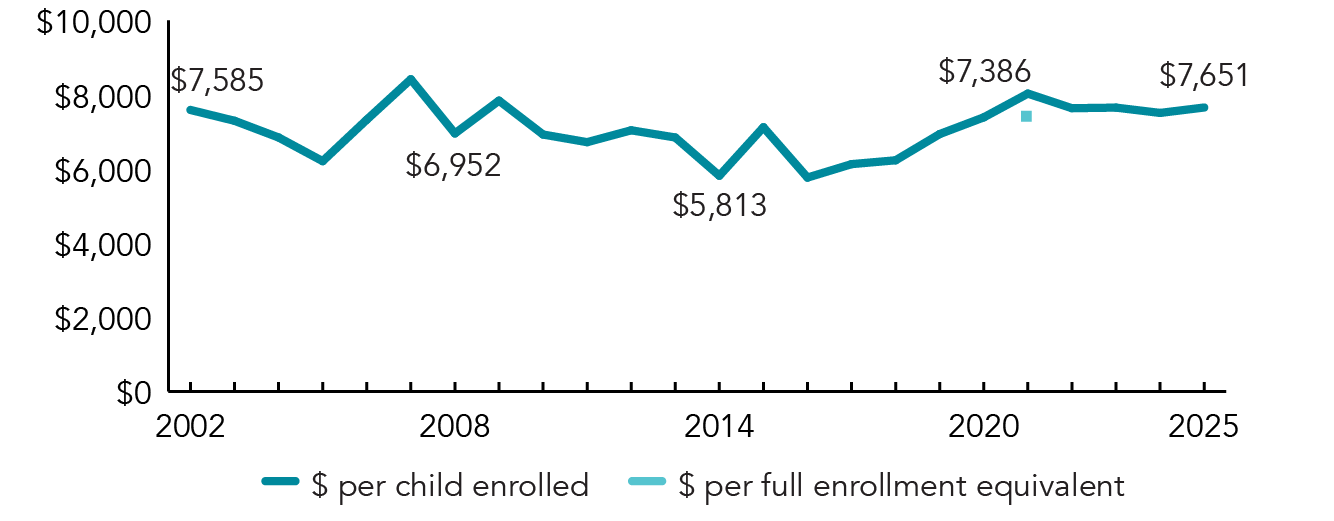
During the 2024-2025 school year, Alabama preschool enrolled 24,238 children, a slight decrease of 402 from the prior year. State spending totaled $185,448,382, up $528,976 (0.3%), adjusted for inflation, since last year. State spending per child equaled $7,651 in 2024-2025, up $146 from 2023-2024, adjusted for inflation. Alabama met 10 of 10 quality standards benchmarks.
What's New
In December 2025, Alabama was awarded a federal PDG B–5 Systems Building Grant totaling $3,877,350. This grant supports eight interrelated systems-building projects designed to address priority needs identified in the state’s most recent needs assessment and strategic plan. The initiative focuses on strengthening workforce capacity, improving program quality and alignment across the mixed-delivery system, expanding meaningful family engagement, and enhancing cross-agency data integration.
Through coordinated implementation, these projects will expand professional learning and career pathway supports, strengthen governance and cross-sector collaboration, advance Alabama’s early childhood data and analytic capacity, and elevate family voice in program design and decision-making. Together, these efforts will promote a more coordinated early childhood system serving children birth through age five across all settings, with particular attention to rural communities and historically underserved populations.
Background
First Class Pre-K (FCPK) is a grant program administered by the Office of School Readiness within the Alabama Department of Early Childhood Education (ADECE), which is part of the Governor’s Cabinet. The program funds full-day preschool education for 4-year-old children in every county through a mixed-delivery model that includes public schools, private child care centers, Head Start programs, community organizations, faith-based centers, colleges and universities, and military agencies. Through a multi-pronged approach, ADECE ensures that all children enrolled in FCPK have access to high-quality early learning classrooms in their communities. FCPK remains a voluntary, universal program available to all 4-year-olds in Alabama, regardless of setting or geographic location.
To better reflect differences in community context and operating conditions across the state, FCPK recently implemented a data- informed, six-tier funding adjustment. All classrooms continue to receive the same base award; however, classrooms are placed into one of six tiers using three years of FCPK student data and community-level economic and access indicators drawn from census tracts within a 10-minute drive of each site. Classrooms in higher tiers receive additional funding to help address local economic and access barriers. This approach supports transparent and consistent funding decisions while preserving FCPK’s universal access model and maintaining the same eligibility requirements, standards, and expectations statewide.
Funding for FCPK is distributed through the Alabama Education Trust Fund Budget using a competitive grant structure that includes awards to support program quality, primary classroom operations, and the start-up of new classrooms. All classrooms receive a base level of funding, and the six-tier context-based adjustment provides additional support where local conditions warrant it. Applications for funding must meet threshold eligibility requirements that include regulatory compliance and alignment with FCPK standards, they are evaluated using a structured rubric that considers organizational capacity, classroom readiness, program quality, community need, family engagement, and fiscal responsibility. The tier adjustment applies only to funding levels and does not affect eligibility, enrollment policies, or the high-quality standards required of all FCPK classrooms.
Alabama First Class Pre-K Program
| |
| Total state pre-K enrollment | 24,238 |
| School districts that offer state program | 100% (counties) |
| Income requirement | No income requirement |
| Minimum hours of operation | 6.5 hours/day; 5 days/week |
| Operating schedule | School or academic year |
| Special education enrollment, ages 3 and 4 | 4,389 |
| Federally funded Head Start enrollment, ages 3 and 4 | 8,261 |
| State-funded Head Start enrollment, ages 3 and 4 | 0 |
Resources
| Total state pre-K spending | $185,448,382 |
| Local match required? | Yes |
| State Head Start spending | $5,492,533 |
| State spending per child enrolled | $7,651 |
| All reported spending per child enrolled* | $10,741 |
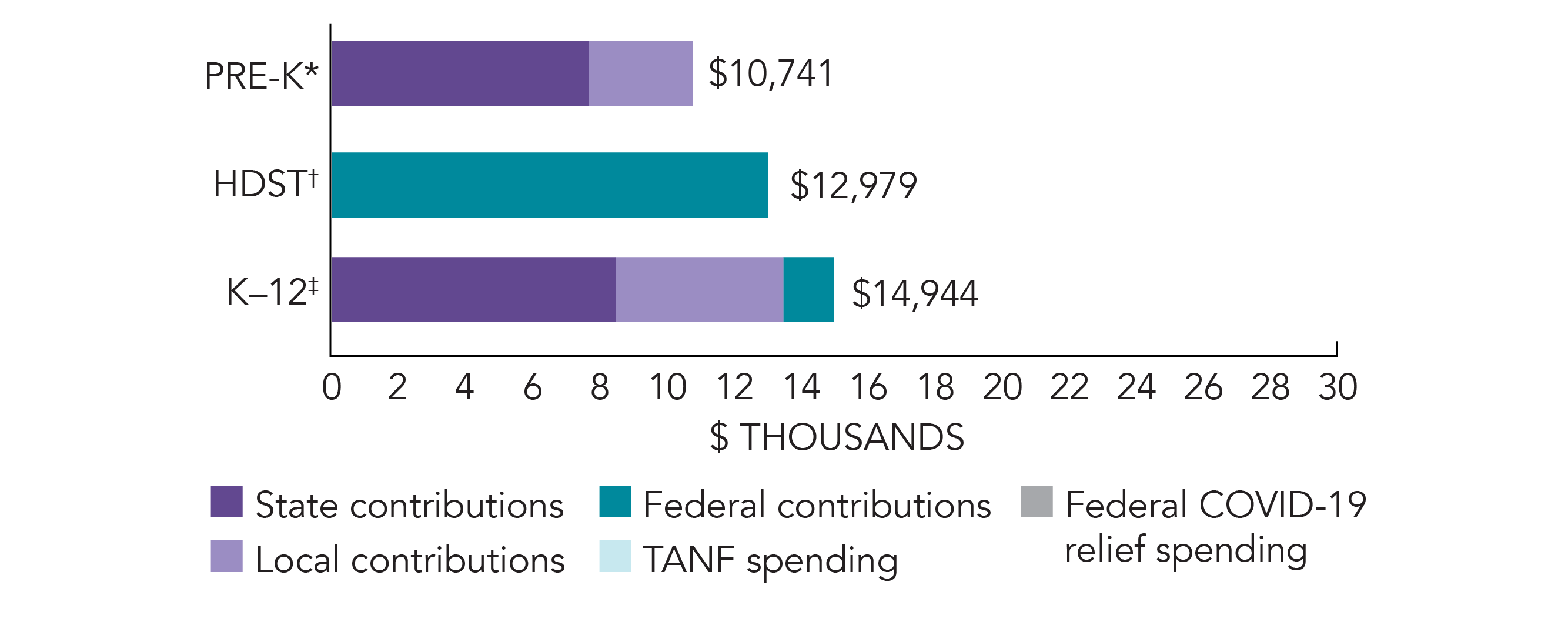
*Pre-K programs may receive additional funds from federal or local sources that are not included in this figure. †Head Start per-child spending includes funding only for 3- and 4-year-olds. ‡K–12 expenditures include capital spending as well as current operating expenditures.
Alabama Quality Standards Checklist
| Policy | Requirement | Benchmark | Meets Benchmark? |
|---|---|---|---|
For more information about the benchmarks, see the Executive Summary and the Roadmap to State pages. | 10benchmarks met | ||
| Early Learning & Development Standards Benchmark | Comprehensive, aligned, supported, culturally sensitive | Comprehensive, aligned, supported, culturally sensitive | |
| Curriculum Supports Benchmark | Approval process & supports | Approval process & supports | |
| Teacher Degree Benchmark | BA | BA | |
| Teacher Specialized Training Benchmark | ECE, CD, ECE SpEd | Specializing in pre-K | |
| Assistant Teacher Degree Benchmark | CDA or 9 ECE/CD credits | CDA or equivalent | |
| Staff Professional Development Benchmark | 30 hours/year (teachers); 20 hours/year (assistants); PD plans; Coaching | For teachers & assistants: At least 15 hours/year; individual PD plans; coaching | |
| Maximum Class Size Benchmark | 20 (4-year-olds) | 20 or lower | |
| Staff to Child Ratio Benchmark | 1:10 (4-year-olds) | 1:10 or better | |
| Screening & Referral Benchmark | Vision, hearing, health & more | Vision, hearing & health screenings; & referral | |
| Continuous Quality Improvement System Benchmark | Structured classroom observations; Data used for program improvement | Structured classroom observations; data used for program improvement | |